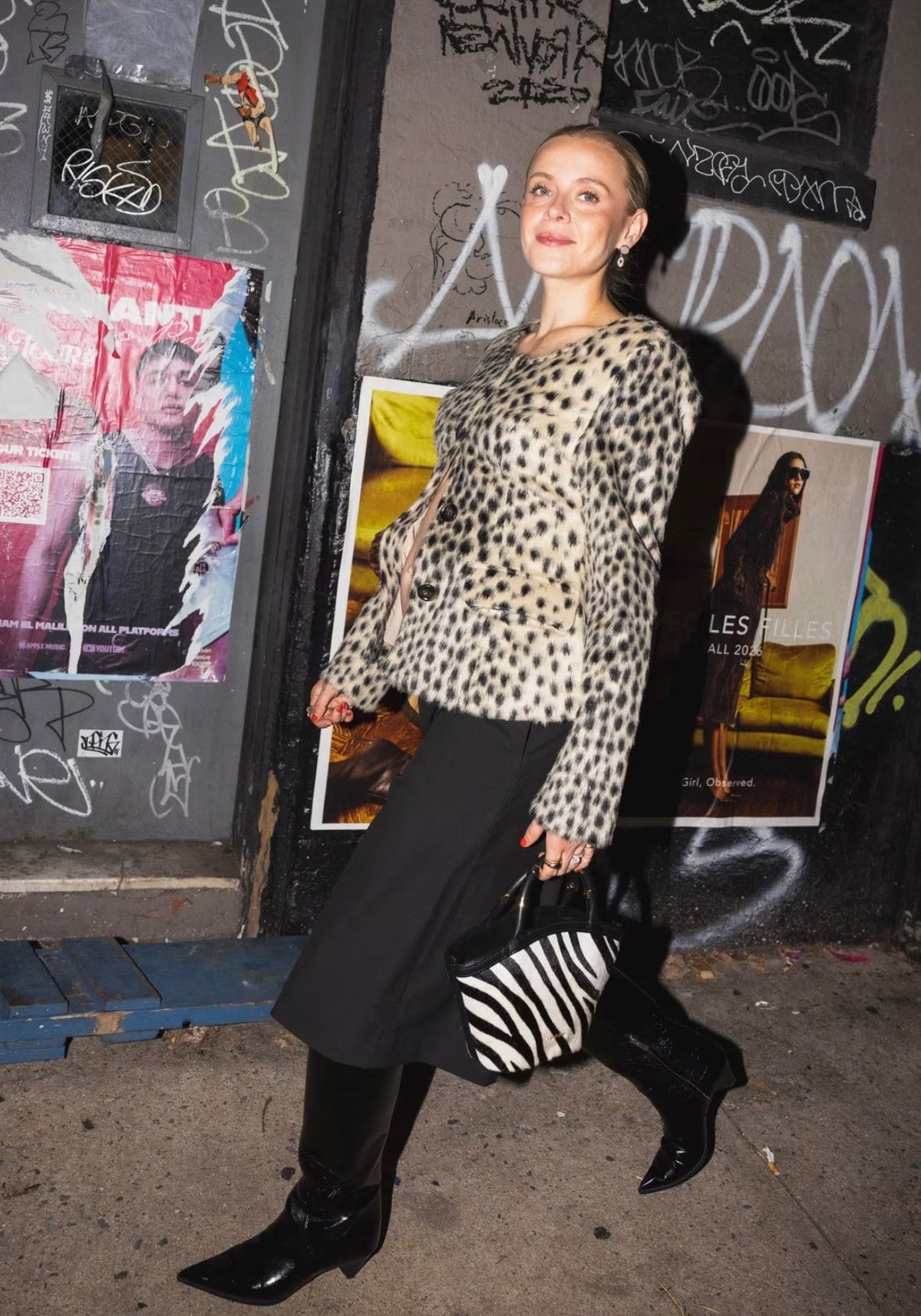
A great coat changes the posture before it changes the outfit. Statement outerwear does more than add a final layer: it establishes proportion, sets the mood, and gives even the simplest foundation a point of view. Over a knit and trousers, it creates intention. Over an evening look, it provides a stronger entrance and an equally considered exit.
For women whose days move between meetings, flights, dinners, and the unexpected space in between, this matters. The right outer layer is not reserved for a photograph or an occasion. It is the piece that makes a wardrobe feel complete in motion.
What Makes Statement Outerwear Worth Keeping
Statement does not have to mean excessive. The most enduring outerwear makes an impression through design discipline: a sculptural shoulder, a deliberate sleeve, a precise waist, an elongated line, or a contrast in texture. It holds its own without asking the rest of the look to compete.
This is where construction becomes visible. A well-resolved jacket or coat creates shape around the body rather than simply sitting on it. The effect can be subtle, but it is felt immediately. A clean collar frames the face. A controlled volume gives movement a sense of purpose. A tailored closure can turn a familiar outfit into something more composed.
The distinction is especially clear when the layer comes off. A compelling piece should not rely on styling tricks to make sense. Its proportions, finish, and internal logic should carry the eye on their own.
There is also a practical argument for presence. A wardrobe built around elevated outerwear asks less of everything else. A white shirt, dark trouser, fine knit, or simple dress can become the quiet base for a more expressive silhouette. Instead of accumulating separate looks for separate moments, you create range through one decisive layer.
Choose Structure Before Spectacle
The question is not whether a piece is bold. It is whether its boldness belongs in your life.
Start with where you need it to work. A sharp jacket with architectural proportion may become the layer that defines your workweek, particularly when the rest of your wardrobe leans pared back. A longer silhouette can be more useful for travel and city days, creating a complete line over separates while accommodating changes in weather and setting. A more directional piece may be reserved for dinners, gallery openings, and after-hours plans, when a standard coat would feel too expected.
Consider the visual weight, too. Outerwear is often the first thing people see, so its scale matters. A substantial shape can ground wide-leg trousers or a fluid skirt. A more fitted line can bring clarity to relaxed tailoring. If your wardrobe already contains volume, look for definition through the shoulder, waist, or length. If you tend to wear streamlined pieces, a coat with controlled dimension can introduce contrast without overwhelming the look.
Color deserves the same level of thought. Neutral tones tend to deliver the most mileage, but neutrality is not synonymous with forgettable. Depth, finish, and silhouette can do the work. A richer tone or considered texture can be equally versatile when it relates to the colors you return to most. The aim is not to match every item you own. It is to create a layer that makes your existing pieces feel more resolved.
The fitting room test
Before committing, test the garment against the movement of a real day. Sit down. Reach for a bag. Layer it over the knitwear you actually wear. Notice where the hem falls over trousers and skirts. A statement piece can be sculptural, but it should still allow you to move through a taxi, a terminal, a dinner table, and a long afternoon without becoming precious.
Fit is not only about size. It is about balance. The shoulder should feel intentional rather than restrictive. The sleeve should work with the proportions beneath it. The silhouette should look composed both closed and open. If a piece only works in one pose, it may deliver drama, but not necessarily longevity.
Styling Statement Outerwear Across a Full Calendar
The strength of an architectural layer lies in its ability to shift context. It can make everyday dressing feel exacting, then move easily into a more social setting with only a change of shoes or accessories.
For work, let the outerwear lead and keep the foundation clean. A sculptural jacket over tonal tailoring creates authority without feeling overly formal. The contrast between precise outer structure and an understated base is often more compelling than a look made entirely of strong elements. Give the eye one focal point.
For travel, choose a layer that creates polish the moment you arrive. Airport dressing benefits from pieces that hold their shape and give a relaxed outfit a clear outline, such as an oversized technical raincoat. Think of it as a portable frame: something that can sit over knitwear and trousers for a flight, then carry through a late check-in or a first dinner in London, New York, Dubai, or Paris. The most useful travel wardrobe does not look like travel wardrobe. It looks like you.
After hours, resist the instinct to add drama everywhere. A directional coat or jacket over a simple column of color can feel more modern than an overly styled ensemble. Let the texture, shoulder, or line of the outerwear create tension against a refined dress, skirt, or tailored pant. Confidence in contrast is often enough.
On weekends, statement layers can bring a sense of occasion to clothing that would otherwise remain purely functional. Pairing a defined outer shape with a soft knit or easy separates keeps the result relaxed but intentional. The point is not to dress up every errand. It is to retain your visual language when the schedule loosens.
The Investment Is in Repeat Wear
An investment wardrobe piece earns its place through recurrence, not novelty. The best outerwear becomes recognizable in your personal uniform because it answers multiple needs at once: warmth and presence, practicality and distinction, structure and ease.
That does not mean every piece must be universally adaptable. Some garments are meant to be specific. An after-hours silhouette may not be the coat you reach for on a weekday morning, and that is fine. The more useful measure is whether you can imagine wearing it across years, not just one season. Can it return when the weather changes? Can it transform familiar pieces? Does it still feel like you when the rest of the outfit is pared back?
Limited-run design adds another consideration. When a garment is made with a distinct point of view, it should not need constant replacement to remain relevant. Its value comes from clarity. A memorable silhouette can outlast the moment because it was never built around a passing one.
Care supports that longevity. Give outerwear room in the closet so its shape is not compressed. Use an appropriate hanger, attend to closures before storing, and follow the garment's care instructions rather than treating a structured piece like an afterthought. These small rituals preserve the line that made you choose it in the first place.
A Layer With Its Own Point of View
HSW approaches outerwear as more than a practical category. It is a statement in movement: tailored enough to define the look, functional enough to live in it. The most compelling pieces do not overpower the wearer. They sharpen her presence.
When choosing your next layer, look beyond the immediate impact. Choose the one that meets you at the door, carries through the day, and still feels right when the evening changes course. That is the kind of statement worth making again.
Shop HSW Statement Outerwear
Limited-run outer layers designed to carry the look, from airport arrivals to after-hours plans.
The Black Raincoat — an oversized technical raincoat in matte fabric, transformed by one removable detail. Ready to ship.

The Vendôme Jacket — a leopard coat in faux mink, shaped around the waist rather than the print.

The Bal Harbour Jacket — one jacket, two collar attitudes, with a fitted, waisted silhouette.