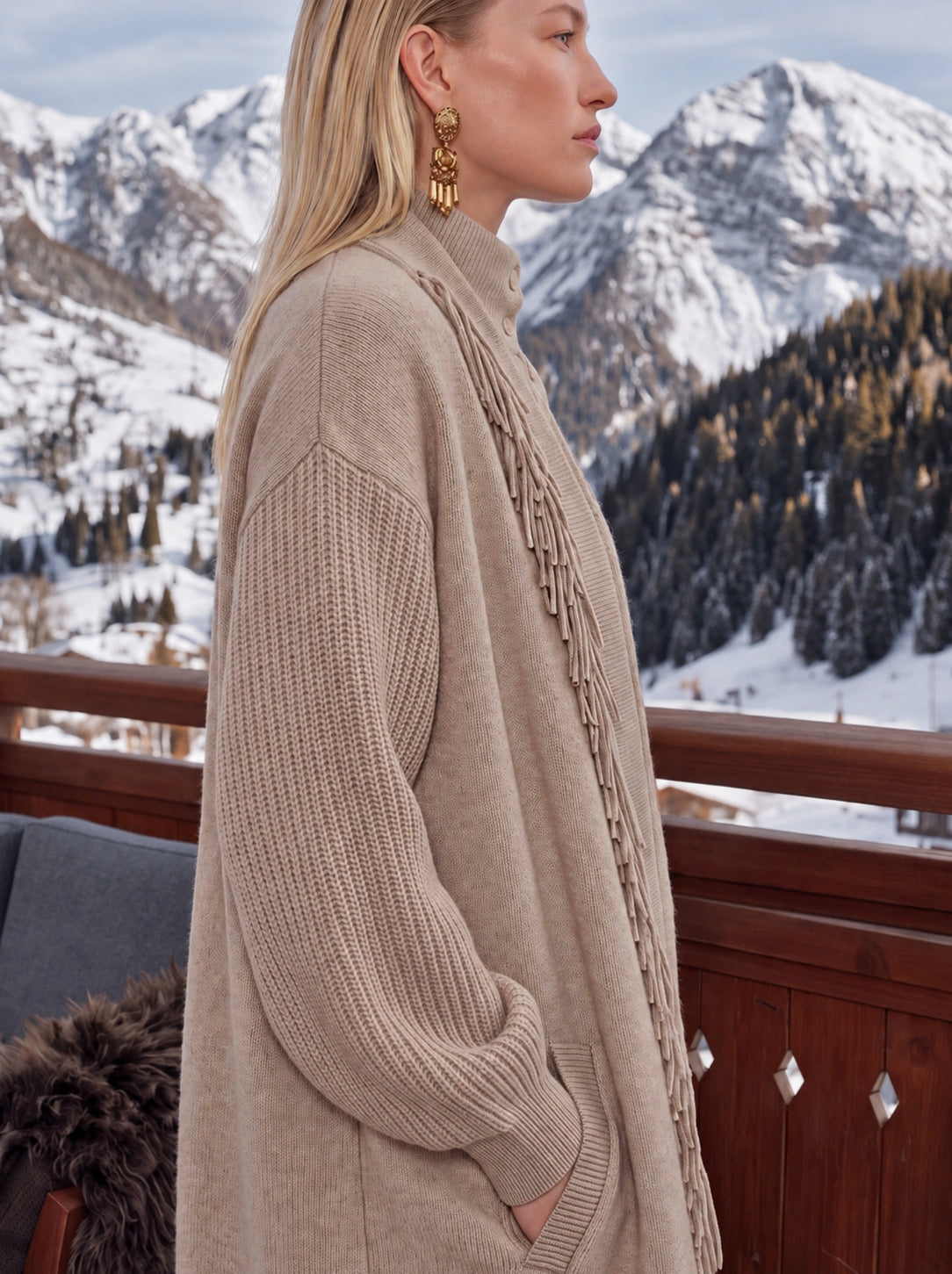
London in October can begin with clear light over Notting Hill and end with rain on a dinner reservation in Mayfair. Knowing what to wear in London in autumn is less about preparing for one forecast than building a look that can move through several. The answer is considered layering: pieces with shape, shoes that can handle pavement, and an outer layer strong enough to define the entire silhouette.
This is a city that rewards a personal point of view. Polished, not precious. Distinctive, not overworked. Autumn dressing in London is an exercise in contrast: soft knitwear beneath a tailored jacket, an architectural coat over a fluid skirt, suede against crisp cotton. The clothes should feel composed in a cab, on foot, and across a long lunch that becomes an evening plan.
What to Wear in London in Autumn: Start With Layers
London autumn typically asks for more than a light jacket and less than deep-winter insulation. September can still feel mild, while November brings colder wind, darker afternoons, and more persistent rain. Temperatures shift within a single day, especially when you move between the Underground, a crowded gallery, and an outdoor walk along the river.
The most useful formula begins with a refined base layer, a warm middle layer, and one defining outer piece. A fitted long-sleeve top or fine knit creates a clean foundation. Add a substantial knit, a sharply cut jacket, or both depending on the month. Then finish with outerwear that holds its form when the weather does not.
Avoid relying on many thin, indistinct layers. They can feel cumbersome once you are indoors and tend to erase the line of an outfit. Instead, choose fewer pieces with visible intention. A sculptural jacket over a close-fitting knit and tailored trousers offers warmth, structure, and an easy answer when the temperature drops.
September: Light Structure, Barely There Warmth
Early autumn in London favors transitional pieces. Think tailored jackets, cropped outerwear, long-sleeve dresses, and knitwear with enough substance to stand alone. A trench-style layer can work for a dry forecast, but a structured jacket has more presence for meetings, lunches, and evening plans.
Pair dark trousers with a fine-gauge knit and leather loafers, then bring a compact umbrella rather than dressing for a downpour that may never arrive. If you prefer a skirt, balance bare legs with ankle boots and a jacket that reaches the hip or slightly below. The result feels intentional without looking prematurely wintry.
October and November: Texture Does the Work
By mid-autumn, texture becomes both practical and visual. Wool, suede, dense knitwear, leather, and brushed finishes give an outfit depth before you add a single accessory. This is the moment for a long coat with a clean shoulder, a voluminous knit under a precise jacket, or suede trousers set against a crisp shirt.
A richer palette naturally belongs here: ink, espresso, charcoal, cream, oxblood, deep olive, and softened black. London is not limited to neutrals, but the city’s changeable skies make nuanced color particularly effective. Choose one strong tonal family, then add contrast through material or proportion rather than competing shades.
Let Outerwear Carry the Look
In London, your outer layer is rarely an afterthought. It is the piece seen on the street, in the back of a black cab, at a café table near the door. Choose it accordingly.
A defined coat brings elegance to relaxed trousers and knitwear. A tailored jacket gives dresses and skirts a sharper edge. For a city break with a full schedule, a leather or suede jacket can add warmth and character, although it is worth considering the forecast before wearing suede in sustained rain. That is the trade-off: beautiful materials deserve sensible planning.
Look for an outer layer that allows for a knit underneath without becoming restrictive at the shoulders. It should also work open indoors. London restaurants, hotels, and galleries are often warm, so an outfit that relies on keeping the coat buttoned loses its logic once you arrive.
HSW’s approach to architectural ready-to-wear feels especially at home here: strong tailoring that frames the wearer, rather than costume dressing that arrives before she does. The most memorable looks have that same discipline. One piece with presence. Everything else in conversation with it.
Build the Silhouette From the Ground Up
London is a walking city, even when the day includes taxis and trains. Your footwear needs to be equal to wet stone, uneven pavement, station stairs, and the occasional long route between plans. This does not require sacrificing polish. It simply means choosing shoes with a real sole, a stable heel, and enough room to remain comfortable after several hours.
Ankle boots are a natural autumn choice, especially with straight trousers, midi skirts, or dresses. Loafers work beautifully in early autumn and on dry days, paired with socks that feel intentional rather than hidden. Sleek knee-high boots can make a skirt or dress feel immediately more autumnal, while a refined sneaker suits a more off-duty itinerary of markets, museums, and long walks.
Save delicate open shoes for a specific indoor occasion. The issue is not London’s formality. It is the reality of rain, pavement, and a day that may include more walking than planned.
Your bag should follow the same principle. A structured shoulder bag or medium top-handle style looks considered and accommodates daily essentials. For travel days, make room for a compact umbrella, a scarf, and the small items that keep a changing day manageable. An oversized bag can be useful, but it should not overwhelm the line of a coat or jacket.
Dresses, Skirts, and Trousers After Dark
London’s evenings have range. One dinner may call for understated tailoring in Soho; another may move toward a more directional look in East London. The most useful after-hours outfits begin as daytime pieces, then shift through proportion, texture, and accessories.
A column dress under a long coat needs little more than boots and a distinctive earring. A full skirt becomes evening-ready with a close-fitting knit and a sculptural jacket. Tailored trousers, a corset-inspired top, and a precise outer layer create a look with enough drama for dinner while remaining grounded in the city’s restrained style language.
The aim is not to appear overly dressed. London style often favors tension over perfection: a polished skirt with a substantial knit, a tailored coat with a slightly undone neckline, a severe trouser softened by tactile fabric. Confidence in contrast.
A London Autumn Packing Edit
For a short trip, packing around interchangeable layers will serve you better than planning a separate outfit for every reservation. Bring pieces that can shift from day to night and repeat without feeling repetitive:
- one structured coat or statement jacket
- two knits in different weights
- tailored trousers and one alternative bottom, such as a skirt or suede trouser
- a day-to-evening dress or elevated top
- weather-capable ankle boots and a second polished walking shoe
Do not overlook a scarf, especially from late October onward. It is less about bulk than flexibility: an extra layer for a windy walk, a soft contrast at the neckline, and an easy way to change the feel of a repeated coat. Choose one with enough scale to have visual presence, but not so much volume that it competes with structured shoulders or a high collar.
Dress for the Plan, Not Just the Weather
The best answer to what to wear in London in autumn is ultimately shaped by your itinerary. A museum morning and neighborhood lunch call for easy tailoring and supportive shoes. A business meeting benefits from a confident jacket and clean lines. A dinner reservation allows for a stronger silhouette, but still demands a coat worth arriving in.
Check the forecast, of course. Then dress for movement, atmosphere, and the version of the city you intend to inhabit. London autumn does not ask for a new wardrobe. It asks for pieces with structure, texture, and the confidence to meet a changing day without losing their line.