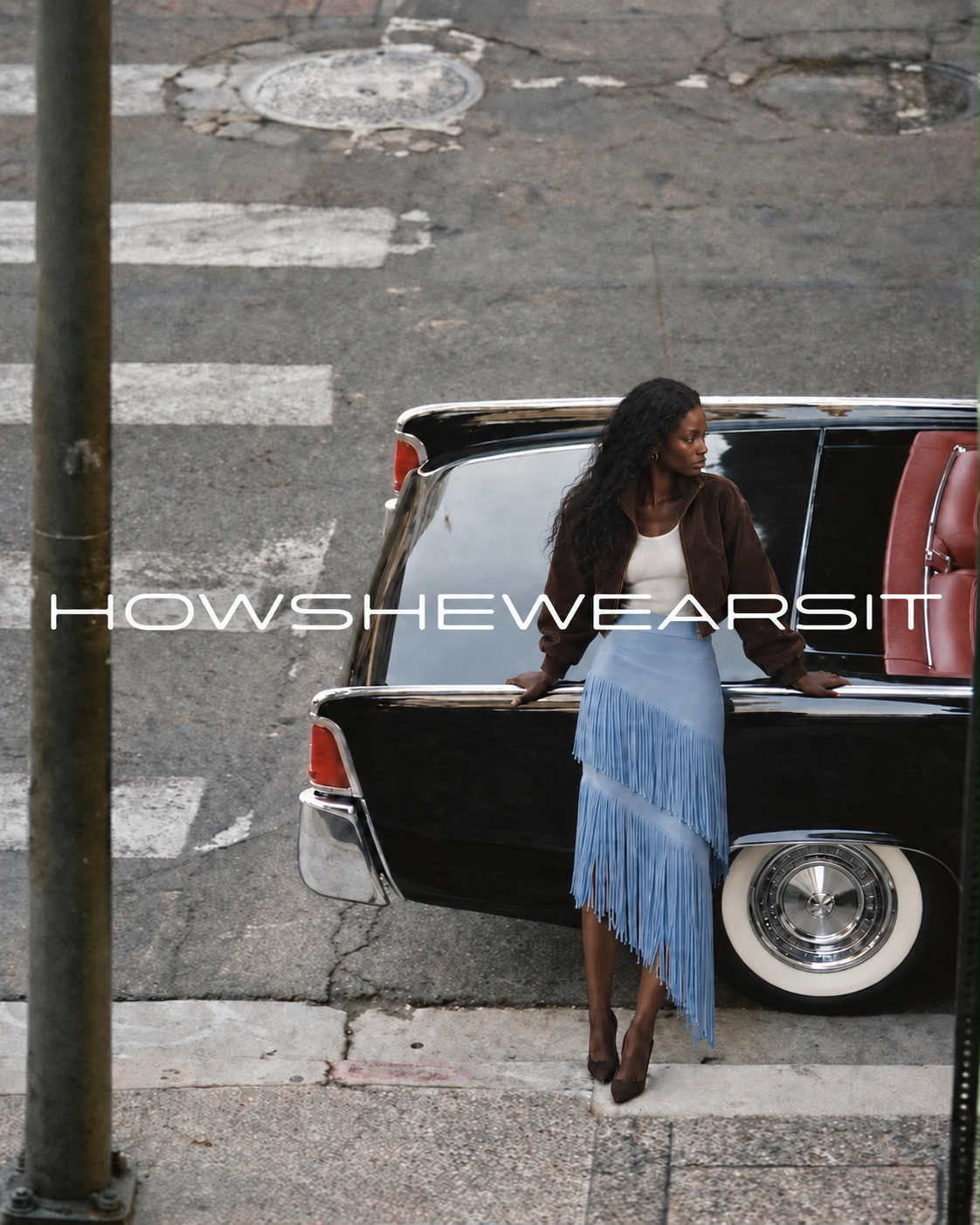
Paris in winter asks for more than a beautiful coat. It asks for proportion, warmth, and the kind of polish that holds from a rain-darkened morning in Saint-Germain to a late dinner across the river. When deciding what to wear in Paris in winter, think in layers with intention - a wardrobe that feels composed in motion, never overworked.
The city is not a costume. Its most convincing winter outfits have a certain restraint: dark, tactile, sharply edited, and personal. You will see tailored wool over denim, flat boots with long skirts, and outerwear treated as the first, rather than final, point of view. The aim is not to disappear into black. It is to let texture, silhouette, and a precise contrast do the speaking.
Start With the Weather, Not the Fantasy
Paris in December, January, and February is typically cold, damp, and changeable. Temperatures often hover around the 30s and 40s Fahrenheit, though wind and rain can make a mild forecast feel more severe. Snow is possible but less reliable than wet pavement, gray skies, and long walks that make footwear non-negotiable.
This is why a thin statement look with an oversized coat thrown on top rarely works for a full day. You need pieces that can hold warmth without compromising the line of the outfit. A fine knit beneath tailoring, a substantial trouser with a close-fitting base layer, or a long-sleeved dress under sculptural outerwear will carry you further than a single bulky layer.
Parisian interiors also complicate the equation. Galleries, restaurants, hotel lobbies, and Métro platforms can feel warm after the street. Build a look you can peel back with ease. A coat should reveal an outfit with presence, not expose a survival layer beneath it.
The Winter Formula: Structure, Softness, Protection
The strongest packing strategy is a compact wardrobe built around three elements: a defining outer layer, adaptable foundations, and shoes that respect the city’s streets. This is less about owning a new outfit for every reservation and more about repeating a clear visual language.
Let outerwear lead
In winter, your coat is in nearly every photograph and every first impression. Choose one with shape. A long, tailored wool coat brings length and authority; a sculptural jacket offers sharper energy for days when a full-length silhouette feels too formal. Deep neutrals such as black, charcoal, chocolate, navy, and soft stone are easy to repeat, while a saturated burgundy or rich olive can provide an equally sophisticated alternative.
Pay attention to what happens underneath. A voluminous coat over wide trousers can be striking, but it needs definition at the waist or shoulder to avoid losing the body entirely. Conversely, a close-cut coat over a column of knitwear or a straight skirt creates a lean, uninterrupted line. Confidence in contrast.
If your itinerary begins in New York or London before Paris, wear the largest outer layer in transit. It protects your luggage allowance and gives you a dependable anchor from airport to dinner.
Build a considered base
Start with two or three knitwear options: one fine enough to layer beneath a jacket, one with more tactile presence, and perhaps a polished cardigan that can function as a top. Merino, cashmere, and wool blends are useful choices because they insulate without the visual weight of a heavy sweatshirt.
Then add tailored trousers or dark, straight-leg denim. Trousers make sense for museum days, café stops, and business-adjacent appointments, particularly when paired with a fitted knit and strong outerwear. Denim can feel equally refined when it is dark, clean-lined, and finished with an intentional shoe rather than treated as an off-duty default.
A midi skirt remains a worthwhile option, especially with tall boots and opaque tights. The key is coverage and balance. A flowing hem with a structured jacket, or a narrow skirt with a softer knit, creates movement without sacrificing warmth. Save bare ankles and delicate evening shoes for another season.
Make footwear practical enough to forget about
Paris rewards walking. Cobblestones, wet crosswalks, narrow pavements, and unplanned detours do not. A polished leather ankle boot with a stable heel, a tall boot with room for socks, or a refined flat with a weather-conscious sole will serve you far better than footwear chosen only for the mirror.
Bring at least two pairs and rotate them. Damp shoes need time to recover, and different days call for different proportions. An ankle boot works with trousers and denim; a taller shaft brings warmth and finish to skirts and dresses. If you prefer sneakers, choose a minimal pair and style them deliberately with tailoring or a long coat. They should look like part of the composition, not a concession.
What to Wear in Paris in Winter by Occasion
A winter wardrobe becomes more useful when each piece can shift setting. Paris does not require a dramatic daytime-to-nighttime costume change. It does reward a small adjustment in texture, jewelry, or silhouette.
For daytime wandering
Try dark tailored trousers, a fine knit, and a sculptural jacket or long coat. Add a scarf with enough density to become part of the silhouette, not merely an emergency accessory. A leather tote or structured shoulder bag keeps the look grounded while holding the real necessities: umbrella, gloves, phone charger, and a layer for warmth.
The best daytime outfits feel capable. They can move through the Marais, stand in line for a museum, sit at a long lunch, and still look resolved at 6 p.m.
For dinner and after hours
Let the base layer become more directional. A fitted knit with a long skirt, suede corset trousers with a tailored coat, or a sleek dress beneath architectural outerwear creates a quieter kind of drama. The coat remains essential, but the interior look should not feel like an afterthought.
Choose one focal point. It might be a precise neckline, a strong shoulder, a tactile trouser, or sculptural earrings. When every element competes, the effect can become costume-like. Paris at night favors clarity.
For a polished work trip
If your schedule includes meetings, showrooms, or a client lunch, rely on a coordinated palette. Black and charcoal, cream and chocolate, or navy and soft gray make repetition feel intentional rather than limited. A well-cut trouser, knit, and statement jacket can change character with only a different shoe and bag.
This is where investment pieces earn their place. Strong tailoring travels well visually: it brings shape to a long day without requiring constant adjustment. HSW’s architectural approach is particularly suited to this kind of packing - pieces designed to hold their own across movement, meetings, and evening plans.
Accessories That Do More Than Decorate
Winter accessories should earn their space. A large wool scarf offers warmth and can soften the geometry of a tailored coat. Leather gloves preserve the line of an outfit more elegantly than bulky alternatives. A compact umbrella is practical, though a water-resistant hooded layer may be more useful when rain is persistent.
For color, think of accessories as controlled punctuation. A red glove, a deep green scarf, or a metallic earring can shift an otherwise tonal outfit without breaking its discipline. Keep the palette narrow, then allow one element to carry a little tension.
Bags deserve the same thought. A structured day bag with a secure closure is useful in busy areas and makes an outfit feel immediately more finished. For evening, a smaller bag changes the scale without requiring an entirely different wardrobe.
What to Leave Out of the Suitcase
There is no need to pack every version of yourself. Multiple fragile heels, thin blazers without a layering plan, and oversized casual pieces that cannot sit beneath your coat tend to take up space without supporting the trip. The same goes for outfits that only work in a dry, warm room.
Avoid packing around imagined moments. Pack for the life you are actually likely to live: walking, waiting, sitting outdoors under heaters, stepping inside, and saying yes to dinner after a full day. A limited edit with strong combinations will always feel more luxurious than a crowded suitcase.
Paris in winter is at its best when the city feels close: the glow from a café window, the sound of shoes on wet stone, the weight of a coat that makes you stand differently. Dress for that sensation. Warm enough to stay present. Defined enough to be remembered.