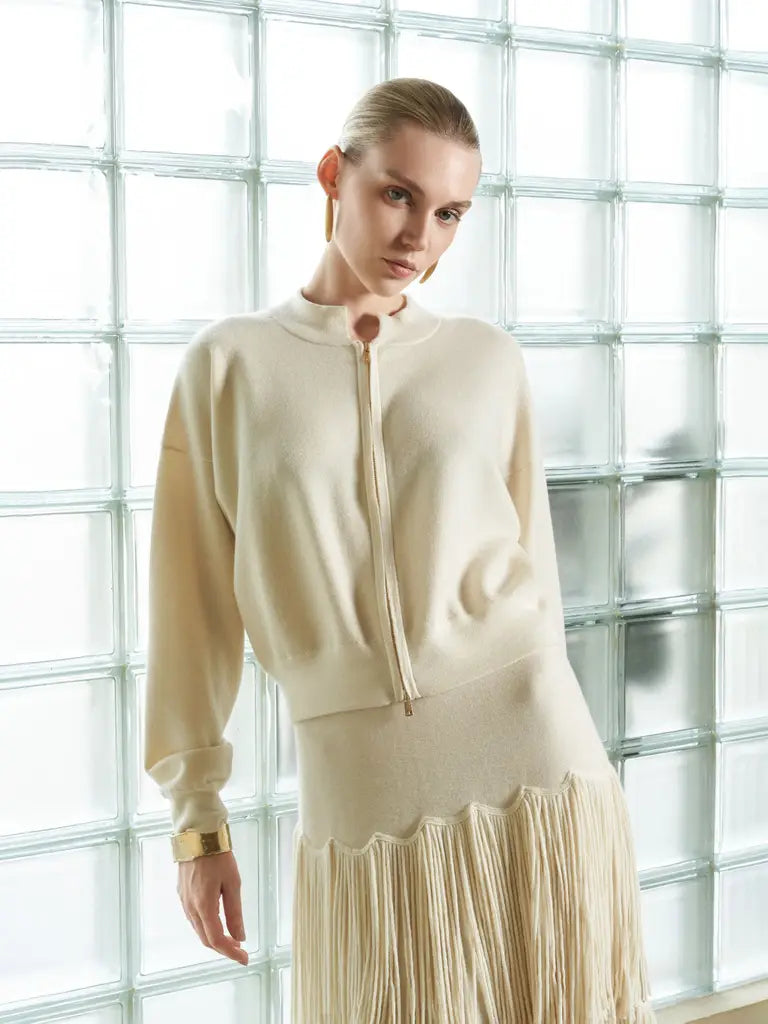
A jacket should hold its line at the airport, at a late table in New York, and in the back seat on the way home. A pair of trousers should feel as assured at work as they do after hours. Made to order luxury clothing begins with this expectation: not more clothing, but better decisions in cloth, cut, and construction.
For a woman who dresses with intention, the appeal is not novelty. It is the rare satisfaction of a piece that feels deliberate before it ever reaches her wardrobe. The silhouette has been considered. The quantity is controlled. The garment is made for a longer life than a single occasion.
Why Made to Order Luxury Clothing Feels Different
Ready-to-wear has its place. It offers immediacy and allows a woman to build a wardrobe around pieces she can see, try, and wear now. But made-to-order production shifts the rhythm. A garment is produced after demand has been established, rather than in anticipation of it. That quieter model changes what matters.
It asks the customer to value process alongside possession. There is time for fabric to be cut with care, for construction to receive attention, and for a design to arrive with a sense of purpose rather than excess. The wait is part of the exchange. In return, she receives a piece made in limited quantities and chosen with a more considered eye.
This does not mean every made-to-order garment is automatically exceptional. Luxury still depends on the discipline behind it: a strong pattern, precise tailoring, material with character, and a silhouette that does not collapse once it leaves the studio. The production model supports quality. It does not replace it.
At its best, made-to-order luxury clothing reduces the distance between design intent and daily wear. A sculptural jacket can retain its authority without becoming costume. A structured trouser can create a clean vertical line while allowing its wearer to move through a full day. Presence, with purpose.
The Value Is in the Decisions You Can Feel
A lasting wardrobe rarely announces itself through abundance. It is built through pieces that solve more than one moment. The coat that finishes a simple knit and trouser combination can also carry a dinner look. The skirt with a distinct proportion can become the point of contrast beneath restrained outerwear. The strongest garments give their wearer options without requiring explanation.
Made-to-order production is particularly suited to clothing where proportion matters. Architectural shapes need balance. The placement of a seam, the weight of a material, the shape of a shoulder, and the fall of a hem all affect whether a garment feels effortless or overly engineered. These decisions are subtle when they are successful. You notice them in the way the piece frames the body and holds its shape as the day develops.
There is also a different kind of confidence in wearing something produced in a limited run. It is not about being difficult to find. It is about avoiding the visual repetition that can make even a beautiful garment feel anonymous. For women who move between London, Dubai, Paris, Riyadh, and New York, personal style often needs to travel well. A distinctive piece becomes useful when it can hold its own in different rooms, climates, and contexts.
The trade-off is simple: made to order requires patience. It is not the right choice when a specific event is days away or when spontaneity matters more than long-term fit within a wardrobe. But for a considered purchase, that pause can be valuable. It gives the garment a chance to be chosen, not merely acquired.
Made to Order Is Not the Same as Bespoke
These terms are often grouped together, but they describe different experiences. Bespoke clothing is designed and made around an individual client, usually involving personal measurements, fittings, and extensive customization. It is a highly personal process, often with a correspondingly complex timeline.
Made to order generally begins with an established design. The garment follows a defined silhouette, size range, and construction, then is produced in response to an order. The wearer benefits from the designer's resolved point of view while participating in a more intentional production cycle.
Pre-order is related, though it can operate differently. A pre-order may reserve an item before its production window begins, while made to order specifically describes production tied to an order. The exact approach varies by label, so it is worth reading the product details and policies before purchasing. Clarity is part of luxury service.
For most wardrobes, made to order occupies an appealing middle ground. It retains the clarity of ready-to-wear while offering the restraint, scarcity, and deliberate pace that many women now look for in investment pieces.
How to Choose a Piece Worth Waiting For
Start with the life you actually lead. Not an imagined version of it. Consider the settings that repeat: client meetings, gallery openings, flights, dinners, weekend departures, family occasions, and the quiet days between them. The most successful statement piece is not reserved for rare spectacle. It becomes a reliable element of your personal uniform.
Look first at shape. Does the shoulder feel intentional? Does the length work with the footwear you wear most often? Can the piece layer over the knits, shirts, or dresses already in your wardrobe? A dramatic silhouette can be highly versatile when its proportions are clean and its styling possibilities are clear.
Then consider materiality. Tactile surfaces and substantial construction bring depth to an outfit with very little effort. Yet practicality matters. Think about movement, climate, care, and how the piece will live in transit. A garment that stays beautiful only in a controlled setting may be right for a particular event, but it is not necessarily the foundation of a hard-working wardrobe.
Finally, ask whether you would still want to wear it without the occasion that prompted the purchase. If the answer is yes, it has range. If you can imagine it with flat shoes in daylight and heels after dark, it has a future beyond one photograph.
The Wardrobe, In Motion
The strongest luxury pieces are not fragile declarations. They are companions to a life that changes pace. They move from a morning meeting to an evening reservation. They pack with intention for a city escape. They make simplicity feel composed rather than plain.
This is where architectural ready-to-wear has particular force. Structure creates clarity. It can sharpen an otherwise minimal look, add shape to softer elements, or give a familiar outfit a new point of view. The garment does not need to compete with the woman wearing it. It should make her feel more like herself, only more resolved.
HSW approaches this idea through limited-run pieces that place construction and wearability in the same frame. A statement is strongest when it is lived in. That means a coat designed for departure, tailored separates that hold their shape through a demanding day, and tactile pieces that make an entrance without asking for one.
A More Considered Way to Buy
Choosing made to order is not a claim of perfection. It is a decision to be more selective about what enters the wardrobe. It favors fewer pieces with clearer roles, thoughtful construction over impulse, and designs that continue to reveal themselves with wear.
The most compelling luxury clothing does not ask to be saved for later. It meets the woman where her life is already happening, then gives that life a sharper outline.