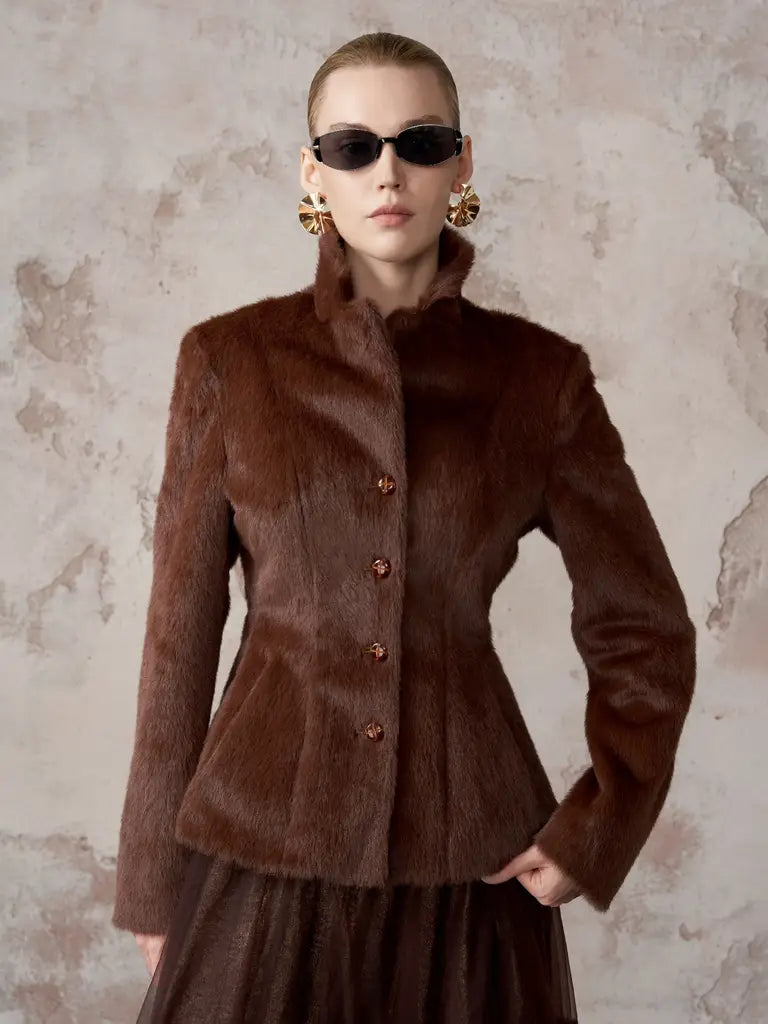
A dinner reservation can ask more of an outfit than a formal event. The room is closer, the lighting is less forgiving, and the conversation lasts longer. The most compelling statement dinner outfits women choose do not compete with the table. They hold their own across it.
This is not about dressing loudly. It is about choosing one element with conviction, then allowing the rest of the look to sharpen its effect. A structured shoulder. The depth of suede. A long, clean trouser line. Presence, considered.
The Dinner Invitation Has Its Own Dress Code
Dinner sits between the certainty of daywear and the theatricality of an evening event. You need enough distinction to feel intentional when you arrive, but enough ease to remain yourself through a late dessert, a change in venue, or a walk through a city that does not pause for your plans.
That tension is the point. A statement piece should make the outfit feel composed, not costumed. It should still work when your coat comes off and when you are seated for two hours. The best choice has an architecture that reads from across the room and a comfort that makes you forget you are wearing something exceptional.
For a gallery-adjacent dinner in New York, that may mean sculptural tailoring with pared-back trousers. In London, where a dinner can turn into a long night without warning, a polished knit worn with a precise skirt offers softness without losing line. In Dubai or Riyadh, a commanding outer layer can create the entrance, then reveal a more streamlined silhouette beneath it.
The location shapes the mood. Your point of view should remain intact.
Start With One Decisive Line
A memorable look rarely needs multiple declarations. Begin with the garment that gives the outfit its shape, then edit around it. This approach is especially useful when time is short and the invitation is vague.
Let structure do the work
A sculptural jacket is often the clearest answer to an after-hours plan. It brings definition to a simple base and changes the posture of what sits beneath it. Worn over a fine knit and tailored trousers, it feels assured rather than overworked. Paired with a skirt, it creates a study in proportion: controlled above, fluid or narrow below.
The goal is not to add more. It is to establish a silhouette with a clear center of gravity. If the jacket has volume, keep the lower half long and refined. If the trousers are wide or architectural, choose a close, uncomplicated top. Let one line lead.
Suede corset trousers offer a different kind of statement. They carry tactility and edge, but their real strength lies in their precision. Balance them with a restrained top, a considered layer, and accessories that do not interrupt the vertical line. The effect is feminine, directional, and still grounded in what a dinner actually requires: sitting, moving, arriving late without looking undone.
Use contrast with restraint
Contrast gives an outfit its charge. It might be a soft knit against sharply tailored trousers, or a compact top beneath a coat with a more dramatic proportion. It might be matte texture beside a polished shoe. The difference should feel deliberate, never busy.
A useful test is to look at the outfit in three parts: silhouette, texture, and finish. Let one be expressive, one be quietly supportive, and one remain almost invisible. If the silhouette is sculptural, keep the finish clean. If the material is tactile, resist competing jewelry. This is confidence in contrast, not excess.
Statement Dinner Outfits for Women, by Setting
The same piece can shift meaning depending on where the evening begins. Rather than building a separate wardrobe for every reservation, adjust the supporting elements around a core statement.
For a restaurant where the setting is intimate and the dress code is implied, choose a tailored jacket or elevated knitwear with trousers that hold their shape. This combination has enough authority for a business dinner, yet it does not feel overly formal when the conversation becomes personal. A compact bag and a defined shoe are enough to complete it.
For a celebratory dinner, a skirt can bring movement and a little more drama. Keep the top structured or close to the body so the look retains clarity. If you add an outer layer, make it part of the outfit rather than an afterthought. The right jacket should look as intentional draped over a chair as it does at the entrance.
For a dinner that follows travel, comfort becomes a design requirement. A strong knit, tailored trousers, and outerwear with a precise silhouette can move from an airport lounge in Paris to a late table without a complete change of character. Avoid pieces that require constant adjustment or footwear that only works for the first ten minutes. Ease is not separate from elegance. It is what allows elegance to last.
For a more private, after-hours occasion, consider a textural focal point. Suede, a sculpted waist, or an unexpected proportion can create intimacy without relying on ornament. Keep the palette controlled. Deep neutrals, tonal dressing, and thoughtful contrast tend to photograph well, travel well, and remain relevant long after the night itself.
Build the Rest Around Restraint
Accessories should clarify the outfit, not explain it. When the clothing has a strong line, choose a shoe with a clean profile and a bag that does not overpower the scale of the silhouette. Jewelry can be minimal, but it should be intentional: a single pair of earrings, a cuff, or a ring with presence is often more effective than several competing details.
This is also where proportion becomes practical. A larger jacket may call for a smaller bag. A long trouser can benefit from a shoe that preserves the line rather than cutting it off at the ankle. A fitted waist can support a more architectural outer layer. Small decisions create the calm that makes a statement look expensive rather than effortful.
Color deserves the same discipline. Head-to-toe black can be striking when texture does the talking. Tonal shades create depth without visual noise. If you choose color, make it feel like a decision rather than a decoration. One saturated note against a restrained base has more impact than several accents asking for attention at once.
Dress for the Hours After the Entrance
The strongest dinner outfit understands that the evening will change. You may move from a bar to a terrace, from a quiet room into a crowded one, or from a formal introduction into spontaneous plans. The piece that felt compelling at 8 p.m. should still feel right at midnight.
This is why construction matters. A well-cut jacket maintains its presence after hours of wear. Trousers with a considered shape do not depend on constant styling. Knitwear with substance can soften tailoring while retaining polish. These are not merely beautiful garments. They are tools for a life with movement in it.
HSW approaches after-hours dressing through that balance: architectural pieces with enough function to move beyond the first impression. The most lasting wardrobe investments do not ask you to save them for a single kind of evening. They meet the moment, then continue with you.
Choose the Piece That Changes Your Posture
Before leaving, remove one thing if the outfit feels too resolved. Then ask a better question than whether it is dressy enough: does it alter the way you stand, walk, and enter the room?
A statement dinner look should give you that quiet shift. Not a costume for the evening, but a clearer expression of the woman having it.