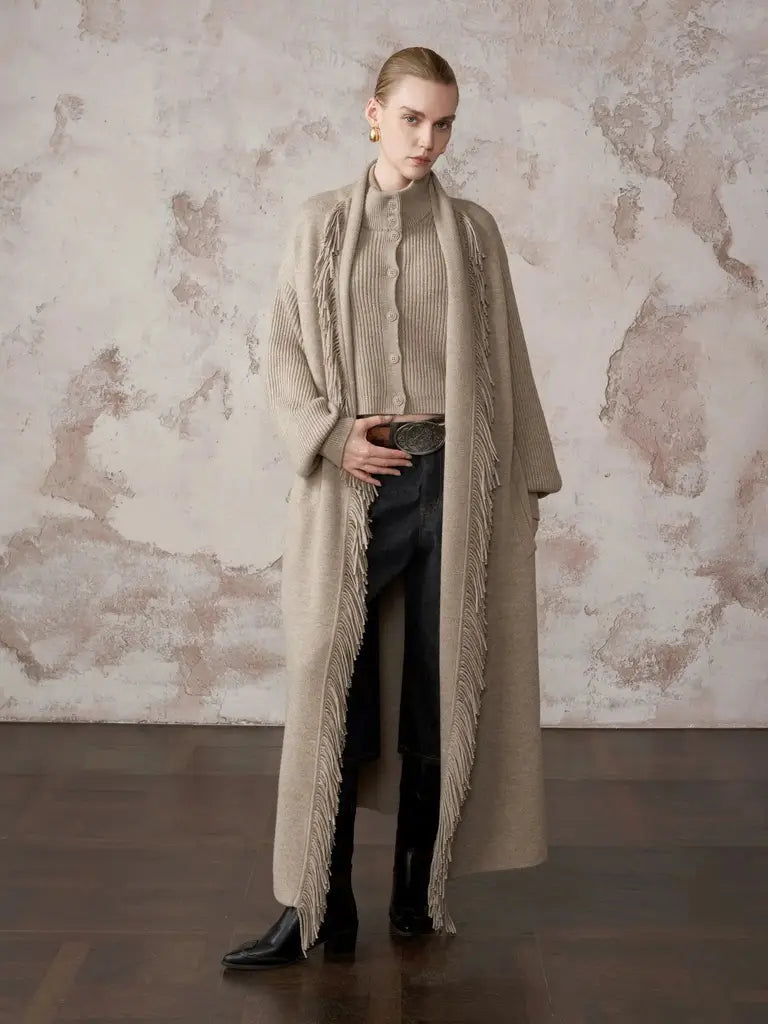
A jacket that holds its line through a long day. Trousers that lengthen the silhouette without restricting the stride. A sculptural knit that needs little else. Architectural luxury womenswear begins with form, but it earns its place through the life a woman can live in it.
This is not dressing for a single photograph or a short-lived trend cycle. It is a consideration of proportion, material, and movement. The most compelling pieces have presence from across the room, then reveal their intelligence in the details: a precise shoulder, a controlled drape, a tactile finish, a fastening placed exactly where it should be.
Structure Is a Point of View
Architectural dressing is often mistaken for severity. Sharp tailoring, defined volume, and clean lines can appear intimidating when viewed only on a hanger. On the body, however, structure can be remarkably clarifying. It creates a frame. It gives the wearer a visible sense of intention before she has said a word.
The distinction lies in balance. A sculptural jacket needs enough room through the arm to move naturally. A wide-leg trouser needs a waistband that sits with confidence, not pressure. A corseted detail can be precise without feeling restrictive when it is cut with the body in mind.
This is where luxury becomes tangible. It is not simply the label inside a garment or the novelty of an exaggerated shape. It is the discipline behind the shape. The hours spent refining a lapel roll, the weight selected for a knit, the lining that allows outerwear to glide over a dress or fine-gauge layer. Construction is the quiet language of confidence.
For the woman who moves between meetings, airports, dinners, and the unexpected invitation, that confidence is practical. A piece with a strong silhouette reduces the need to over-style. It can make a simple tank, crisp shirt, or silk column skirt feel complete.
The Case for Architectural Luxury Womenswear
A wardrobe built around architectural luxury womenswear does not need to be large. It needs contrast and continuity. Think of a sharply cut outer layer over something fluid. Suede against crisp poplin. A fitted waist balanced by a full trouser. The effect is composed, never overly coordinated.
The best investment pieces work across settings because their design is specific, not fussy. A structured blazer can hold its own at a morning presentation, then shift into after-hours territory with a bare shoulder or slender heel. A considered knit, like the Cortina Merino Coat, can travel without losing shape, making it as useful for a city escape as it is for a late lunch at home.
There is a trade-off, of course. Highly sculptural garments ask for a little more discernment than basics. Their proportions matter. Their care may be more deliberate. And not every dramatic piece will suit every day or every climate. But a carefully chosen silhouette can outlast several seasons of impulse purchases because it gives the wearer something far more valuable than novelty: a recognizable point of view.
Material Changes the Message
Architecture is not only line. Surface matters.
A matte wool suiting fabric creates authority with restraint. Brushed suede introduces depth and sensuality, especially when cut into an unexpected form such as corseted trousers. Dense knitwear can create volume without the stiffness of tailoring, while a fluid crepe softens the edge of a more exacting jacket.
Texture also determines how a garment travels through the day. Some fabrics become more compelling in changing light. Others resist creasing and hold their shape after hours in transit. Neither quality is universally superior. A formal dinner may call for a fabric with a deliberate stillness; a travel day asks for recovery, ease, and enough polish to arrive without changing clothes.
This is why material should be felt, not merely read about. Look for weight, hand feel, and how a fabric responds to movement. A garment can look commanding in a campaign image yet feel too rigid in real life. Equally, a piece that appears minimal online may become unforgettable once its texture and cut are experienced in person.
Build Around Moments, Not Categories
Conventional wardrobes are often organized by product type: blazers, trousers, dresses, tops. A more useful approach begins with where the garment needs to go.
For everyday movement, start with pieces that create a clean foundation: tailored trousers, a structured knit, an outer layer with enough definition to elevate the simplest base. These are the garments that make a morning feel considered when time is not abundant.
For the city escape, choose items that travel with authority. A jacket that can be worn open over a fine layer or closed as a top. Trousers with enough volume for comfort but enough shape for dinner. A compact palette that allows repetition without looking repetitive. Black, ivory, deep brown, charcoal, and softened neutrals offer range, though a singular color can be equally powerful when the silhouette carries the story.
After hours, shift the balance rather than abandoning it. Pair a precise jacket with a softer skirt. Let a suede trouser meet a minimal heel and exposed collarbone. Wear the same sculptural knit with a leaner bottom and a stronger lip. The change can be slight. The confidence should not be.
HSW approaches the wardrobe through these lived moments, treating each limited-run piece as part of a larger proposition: not simply what she wears, but the life she lives in it.
How to Choose a Piece Worth Keeping
Before investing, consider the garment from more than one angle. Does the shoulder sit where it should? Can you raise your arms, sit down, walk quickly, and layer beneath it? Does the silhouette still feel like you when the styling is stripped back?
A statement piece should not require a special occasion to justify itself. The right one creates occasions through repeat wear. It may be the jacket you reach for over denim, the trouser that rescues an uncertain dinner look, or the knit that makes an otherwise simple outfit feel intentional.
Pay attention to the relationship between drama and utility. A sharply peaked shoulder may be exactly right if the body is relaxed. A voluminous sleeve works beautifully when the cuff is controlled. A dramatic hem needs to cooperate with shoes you actually wear. The answer is rarely more decoration. It is better proportion.
Scarcity can be meaningful, too, when it reflects a commitment to fewer, more considered pieces rather than manufactured urgency. Limited runs encourage a different kind of purchase: one made with clarity, cared for properly, and returned to often. Personal style gains strength through repetition. A signature silhouette becomes part of how people remember you.
Wear the Shape, Do Not Let It Wear You
Architectural clothing is most persuasive when it leaves room for the woman inside it. The garment should frame her presence, not compete with it. Let the line do its work. Keep accessories edited. Choose shoes that support the proportion rather than interrupt it.
There is no need to reserve structure for formal rooms or high-visibility moments. Wear the sculptural jacket to the gallery, the airport, the breakfast meeting, the dinner that runs late. Let the trousers move. Let the fabric gather a little evidence of life.
The most lasting wardrobe pieces are not precious because they stay untouched. They become essential because they meet you where you are going, hold their shape, and make each entrance feel more like your own.
Shop the Edit
Limited-run pieces from the current HSW collection, made to move from morning meetings to after-hours plans.

The Sloane Riding Jacket — goat leather and ombré suede, shaped with architectural discipline.

The Laurel Suede Corset Trouser — a corset-inspired waist that falls into volume through the leg.

The Cortina Merino Coat — 100% fine merino that moves like a wrap and wears like armor. Ready to ship.