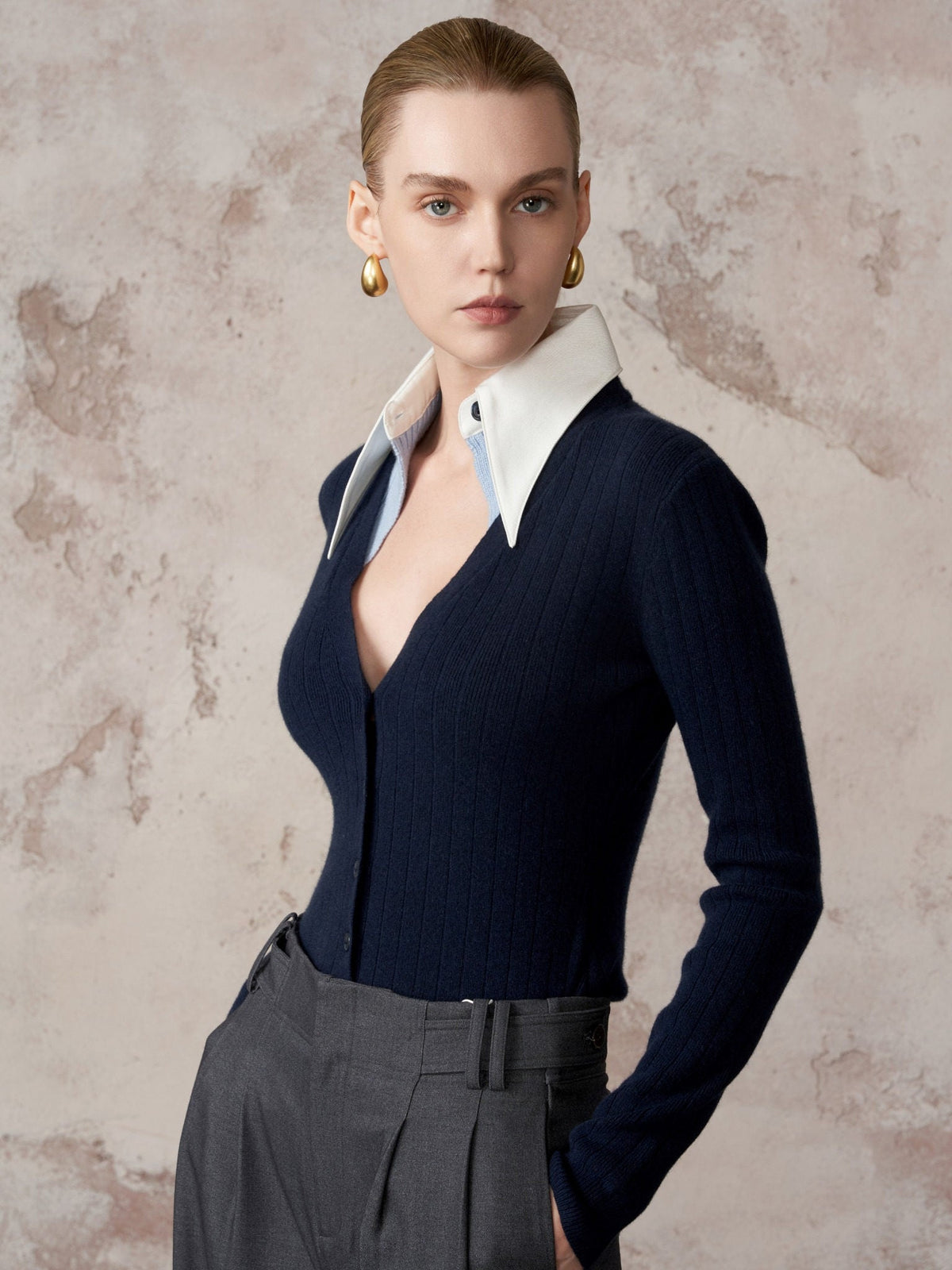
A cashmere cardigan earns its place when it does more than soften an outfit. It should create contrast: warmth against a precise trouser, ease beside a sculptural jacket, a quiet line of texture within an otherwise considered silhouette. Knowing how to style a cashmere cardigan is less about making it look casual and more about giving it intention.
The material already carries presence. Cashmere has depth without visual noise, making it one of the few knits that can move confidently between a morning meeting, a long-haul flight, and a late dinner. The styling decision lies in the proportions around it.
How to Style a Cashmere Cardigan Through Proportion
The cardigan is often treated as an afterthought: a layer to keep nearby, then thrown over whatever came first. A more compelling approach starts with its shape. Is it close to the body or relaxed? Cropped or lengthened? Fine-gauge or substantial? Each version asks for a different counterpoint.
A slim cashmere cardigan works beautifully with volume below. Pair it with a full, fluid skirt or a wide-leg tailored trouser to establish a long, composed line. Buttoned close to the collarbone, it reads almost like a soft, architectural top. Leave one or two buttons undone at the neckline if you want less formality, but avoid turning it into an afterthought. The line should still feel deliberate.
A relaxed cardigan needs more structure elsewhere. Consider a narrow skirt, straight trousers, or a column dress beneath it. The goal is not to minimize the knit, but to let its softness frame a clean foundation. When both the cardigan and the base layer are oversized, the effect can become diffuse. That can work for travel, but it benefits from a defined waist, a sharper shoe, or a structured outer layer.
Length matters just as much. A cropped cardigan can sharpen the waistline over high-rise trousers or a longer skirt. A hip-length style is especially versatile with straight-leg pants and dresses. Longer cardigans create movement, though they are strongest when the underlayer is refined and close enough to the body to maintain clarity.
Buttoned, Layered, or Draped
A cashmere cardigan has more than one role. Treating it as a top, a mid-layer, or a light outer layer changes the entire look.
Worn as a top
Buttoning a cardigan and wearing it on its own is one of the cleanest ways to make cashmere feel modern. Choose a neckline that complements the rest of the outfit, then keep the base uncomplicated. High-waisted trousers and pointed boots create a polished work-to-dinner proposition. A sleek midi skirt brings an even more feminine tension: soft knit above, controlled movement below.
For a more directional finish, tuck only the front edge into the waistband rather than forcing the full knit inside. This preserves the natural drape of cashmere while establishing the waist. If the cardigan is too thick to tuck neatly, let it sit over the waistband and define the silhouette with a belt worn at the natural waist. This works best when the belt is understated and the hardware restrained.
Used as a layer
Layering is where a cashmere cardigan becomes particularly useful. Over a crisp shirt, it can bring softness to tailoring without compromising authority. Let the shirt collar and cuffs appear, but keep the colors closely related: ivory with camel, charcoal with black, pale blue with deep navy. The result is tonal rather than overly styled.
Under a sculptural jacket, a fine cardigan offers warmth without bulk. This is a considered city uniform for New York, London, or Paris when the day begins in cool air and ends somewhere more formal. Keep the cardigan buttoned or nearly buttoned under the jacket so the layers remain disciplined. A low, open neckline beneath a sharply cut jacket can look beautiful, but it is a different mood: more evening, less structure.
A cardigan can also sit over a fitted dress. The contrast is especially effective when the dress has a clean, uninterrupted line and the cardigan is shorter or slightly shaped. The knit then becomes a soft frame rather than a cover-up. Let the hem of the dress remain visible. That vertical extension keeps the look composed.
Draped with restraint
Draping a cardigan over the shoulders has its place, particularly in transit or during a dinner that shifts outdoors. But it works only when the rest of the look is already resolved. A cardigan casually placed over a button-down and tailored trousers can add nonchalance. Over an outfit that already has multiple loose layers, it may feel unfinished.
Think of the shoulder drape as an accessory with function, not a substitute for styling. Fold the cardigan cleanly, allow the sleeves to fall symmetrically, and choose a piece with enough body to hold its form. It is a small gesture, but it changes the read from incidental to intentional.
Create Confidence in Contrast
Cashmere is soft by nature. Give it something sharper to speak against.
Tailored wool trousers, crisp poplin, leather accessories, suede, and a defined heel all bring structure to a cardigan look. The contrast should feel tactile rather than decorative. A black cashmere cardigan with black trousers is not flat when the trousers have a crisp crease, the bag has a firm silhouette, and the shoe introduces a polished finish.
Color can do the same work. Monochrome dressing elongates the body and allows the texture of the knit to lead. A palette of cream, stone, espresso, and black is enduring because the eye reads the outfit as one composition. Introduce contrast through depth rather than competing shades: a pale gray cardigan with slate trousers, or deep brown cashmere with an ink-colored skirt.
When you want more impact, use one intentional interruption. A cardinal-red shoe, a strong gold earring, or a sharply defined bag can change the mood without taking over. Cashmere does not require excessive accessorizing. It rewards discernment.
The Everyday Edit: Work and City Movement
For work, a cashmere cardigan can replace the expected blouse while still looking composed. A close-fitting style with tailored trousers and a jacket is clean, capable, and less predictable than traditional suiting. Keep the buttons aligned, choose a neckline appropriate to the setting, and let one element provide structure: a strong shoulder, a pressed trouser, or a pointed shoe.
On days with meetings across the city, favor a cardigan that can move through changing temperatures and changing levels of formality. Worn with straight-leg trousers and a substantial tote, it feels practical without surrendering shape. Add a jacket when arrival matters. Remove it when the day loosens. The cardigan remains the calm center of the look.
A softer interpretation pairs a fine knit with a midi skirt and knee-high boots. This has a particular elegance for creative offices, gallery appointments, or an afternoon that becomes dinner. The key is the skirt's line. Bias-cut, column, or softly structured shapes tend to work better than excessive ruffles or volume, which can compete with the cardigan's restraint.
The City Escape: Travel Without Looking Undone
Cashmere is one of travel's most intelligent materials, but the airport outfit still deserves proportion. Start with trousers that hold their line: tailored wide-leg pants, compact knit pants, or a straight, comfortable silhouette. Add a fitted top, then use the cardigan as the flexible layer.
A buttoned cardigan under a longer coat reads polished from departure to arrival. An open cardigan over a close-fitting tank is easier for warmer destinations such as Dubai or Riyadh, particularly when paired with a lightweight scarf or structured overshirt. The difference is in the finish. Choose shoes you can walk in, but avoid overly athletic elements if the rest of the look is tailored. A refined loafer, boot, or clean leather flat keeps the composition intact.
For a weekend away, cashmere also works with denim, provided the denim is dark, straight, and well cut. Add a belt, a deliberate shoe, and one elevated layer. The cardigan brings softness; the accessories establish the point of view.
After Hours: Make Softness Feel Intentional
Evening styling does not require a dramatic dress. A cashmere cardigan can create a more nuanced after-hours look when worn with a fluid skirt, sleek trousers, or a fitted dress. Think exposed collarbone, a considered earring, and a silhouette that leaves room for the knit to feel sensual rather than sweet.
Try buttoning only the center of the cardigan to create a subtle shape at the waist, with a silk or fine jersey layer beneath if needed. Or wear it fully buttoned with a longer skirt and a defined heel. The effect is quiet, but it holds attention because every line has been chosen.
If the cardigan is neutral, evening is an opportunity for richer texture below: suede trousers, a lustrous skirt, or a bag with a firm, sculptural finish. If the cardigan itself has color, keep the surrounding pieces edited. One statement is often enough.
Keep the Finish Worthy of the Knit
Cashmere is forgiving in feel, not in appearance. Pilling, stretched cuffs, and a misshapen neckline can quickly undermine an otherwise precise outfit. Fold rather than hang your cardigan when possible, give it rest between wears, and remove pills gently with a suitable cashmere comb or fabric shaver.
More importantly, style it with the same care you give the garment itself. A cashmere cardigan is not there to dilute an outfit. It can sharpen a tailored look, soften a structured one, and make the transition between moments feel considered. Let it carry its own line, then build the rest of the wardrobe around that quiet confidence.