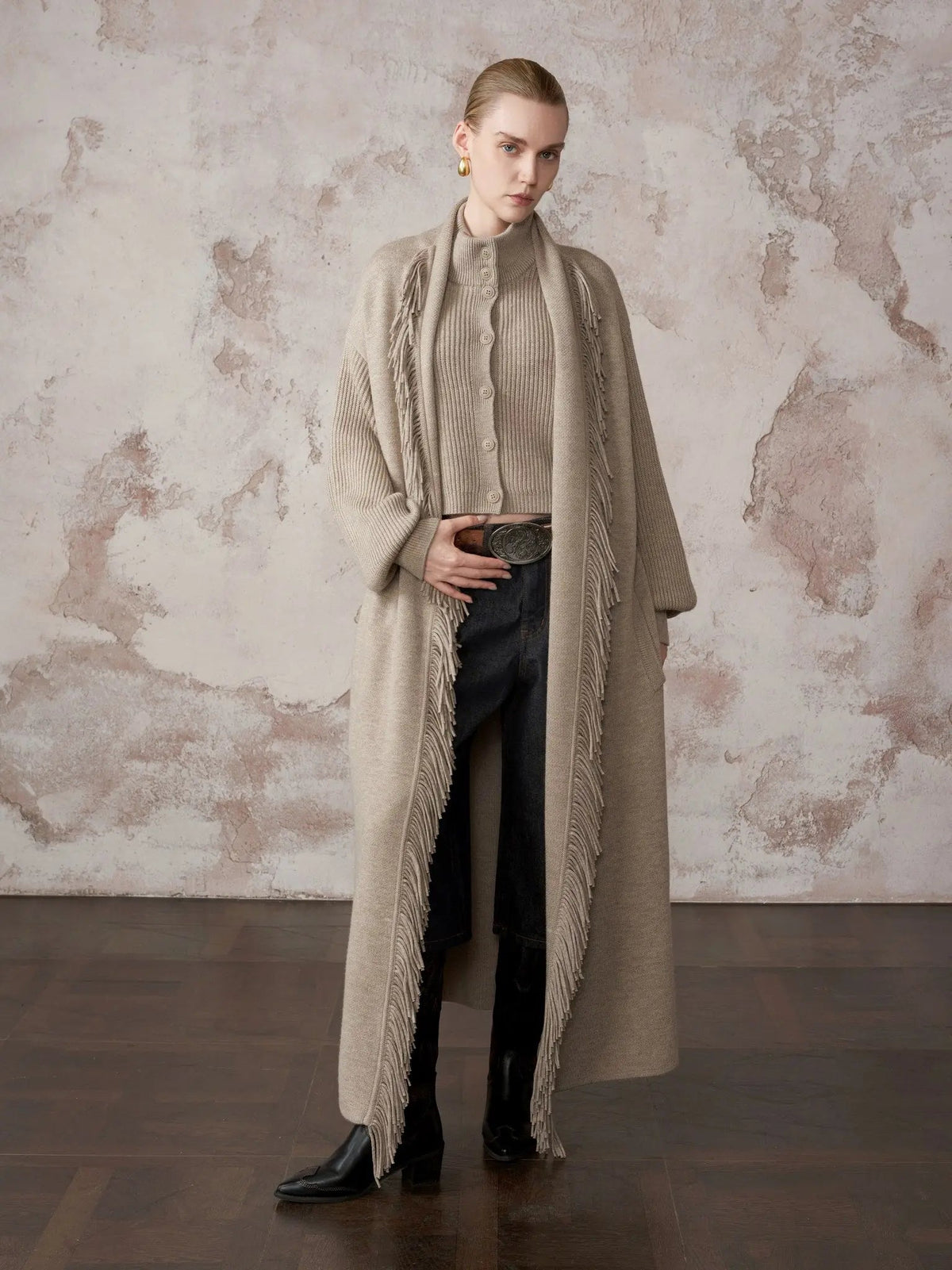
A merino wool wrap coat earns its place not by asking for attention, but by changing the line of everything beneath it. It softens a sharply tailored trouser. It gives denim a more deliberate frame. Over an evening dress, it creates a longer, quieter silhouette that feels considered from car door to dinner table.
This is outerwear with presence and purpose. The wrap is fluid, the wool is intelligent, and the result is a coat that moves with a full calendar rather than sitting waiting for one perfect occasion.
Why a Merino Wool Wrap Coat Feels Different
Merino wool is valued for its fine fibers and naturally soft hand. Compared with coarser wool, it can bring warmth without a heavy or overly rigid feeling, which makes it especially compelling in a wrap coat. The fabric has enough substance to hold an elegant line, while the format of the garment allows for adjustment, movement, and a more personal finish.
A wrap coat does not rely solely on hardware or a prescribed closure to create its shape. Its belt or tie draws the eye to the waist, yet the overall effect can remain relaxed. Worn closed, it reads as composed and protective. Worn open, it becomes an architectural layer, revealing the contrast of what sits underneath.
That duality matters. The best investment pieces do more than complete an outfit. They give you options when the day changes shape.
The Shape Is the Statement
A wrap coat is often described as effortless. That word can overlook the precision required to make one feel elevated. The proportion of the lapel, the placement of the belt, the depth of the overlap, and the volume through the sleeve all determine whether the coat looks intentional or simply oversized.
Look first at the shoulders. A more defined shoulder introduces clarity and polish, particularly over fine knitwear or tailoring. A softer shoulder creates a gentler line and can feel more relaxed in motion. Neither is universally better. The right choice depends on how you want the coat to speak within your wardrobe.
Length changes the conversation, too. A longer merino wool wrap coat creates drama through vertical line and offers greater coverage for city commutes and travel days. A shorter length can feel sharper with wide-leg trousers, skirts, or boots. If your wardrobe leans toward long, fluid silhouettes, a coat with room through the body will feel natural. If you prefer clean, compact proportion, seek restraint in volume.
The belt is not merely functional. It is the point where softness becomes structure. Tie it centrally for a classic waist emphasis, slightly off-center for a more relaxed gesture, or leave it open when the layers beneath deserve to be seen.
Structure without stiffness
The appeal of merino is its ability to balance warmth with refinement. But fabric alone does not create a lasting coat. Construction shapes how it hangs, how it recovers after a long day, and whether its collar holds presence when worn open.
Consider the relationship between the coat and your usual layers. If you often wear blazers, substantial knitwear, or a tailored jacket underneath, ease through the arm and body is essential. If the coat will mainly sit over dresses, shirts, and lighter knits, a closer line may offer the cleaner effect you want.
There is a trade-off. More volume invites layering and movement, but can reduce the sense of definition if the belt is not used. A closer shape reads more polished immediately, but needs enough room to stay comfortable in transit. Luxury is not restriction. It is the confidence of a garment designed to accommodate real life.
How to Wear a Merino Wool Wrap Coat
A wrap coat works best when it is allowed to create contrast. Its softness becomes more compelling beside a crisp cotton shirt, sleek boot, or tailored pant. Its structure is heightened when it meets a fluid skirt or a column dress. The coat should not flatten your point of view. It should give it a frame.
For work, wear it over a fine knit and high-waisted trousers, then secure the belt with a clean knot at the waist. Keep accessories intentional: a structured bag, sculptural earrings, or a pointed shoe can continue the line without competing with it. The effect is calm, not conservative.
For travel, choose layers that can shift with the temperature. A merino wool wrap coat is particularly useful between airports, hotel lobbies, and evening reservations because it looks composed without requiring a separate outfit change. Worn open over tonal separates, it creates an elongated silhouette. Fasten it when the air cools, or use the belt loosely at the back when you want a more relaxed profile.
For after hours, let the coat carry restraint around a more expressive look. Over a slip-like dress, refined knit set, or sharply cut trousers, it adds mystery without covering the outfit’s intent. A coat with a strong lapel and elegant length has the authority to be part of the entrance, not just something removed at the door.
In New York, London, Paris, Riyadh, or Dubai, this flexibility has value. The settings differ, but the need is familiar: one layer that can move from a private meeting to a late table without losing its line.
Choosing Color with Intention
A neutral merino wool wrap coat has obvious range, but neutral does not have to mean anonymous. Black delivers graphic contrast and evening confidence. Deep brown brings warmth to ivory, denim, and gold-toned accents. Charcoal feels precise against black or soft against cream. A pale stone or warm taupe can create a light, tonal composition when styled with similar shades.
The best color is often the one that strengthens what you already wear most. Look at your trousers, knitwear, shoes, and bags before choosing. If your wardrobe is built around inky shades, a lighter coat can introduce dimension. If you favor cream, camel, or soft gray, a dark coat can become the grounding line.
This is where personal style becomes more useful than a passing color forecast. A coat is seen repeatedly, in photographs and in motion. Choose a shade you will want to revisit, not one that only works for a single mood.
Care That Protects the Investment
Merino wool rewards considered care. After wearing, allow the coat to air out before returning it to the closet. Use a broad, supportive hanger to help maintain the shoulder shape, and avoid compressing it between heavy garments. If the coat becomes damp, let it dry naturally away from direct heat.
Spot-cleaning small marks promptly can reduce the need for frequent professional cleaning. When deeper cleaning is required, follow the garment’s care label exactly. Depending on the construction, lining, and finishing, professional dry cleaning may be the appropriate choice.
Pilling can occur with natural fibers, especially where friction is highest at the sleeves, sides, or belt area. This is not automatically a sign of poor quality. A gentle fabric comb or depiller, used sparingly and carefully, can restore a clean surface. Between seasons, store the coat clean and protected from moths, ideally with room for the fabric to breathe.
A Coat for the Life Around It
The strongest outerwear does not demand a special occasion. It meets you at the threshold of the day and makes the rest of the wardrobe feel more resolved. For HSW, that idea is central: statement pieces should remain in motion, shaped by the woman wearing them rather than by a single setting.
A merino wool wrap coat is not defined by one knot, one destination, or one version of you. Wear it closed when you want clarity. Wear it open when the layers underneath have their own story. Let its structure hold the moment, then let the rest be yours.
Shop the HSW edit
Explore the HSW pieces behind these styling ideas.
