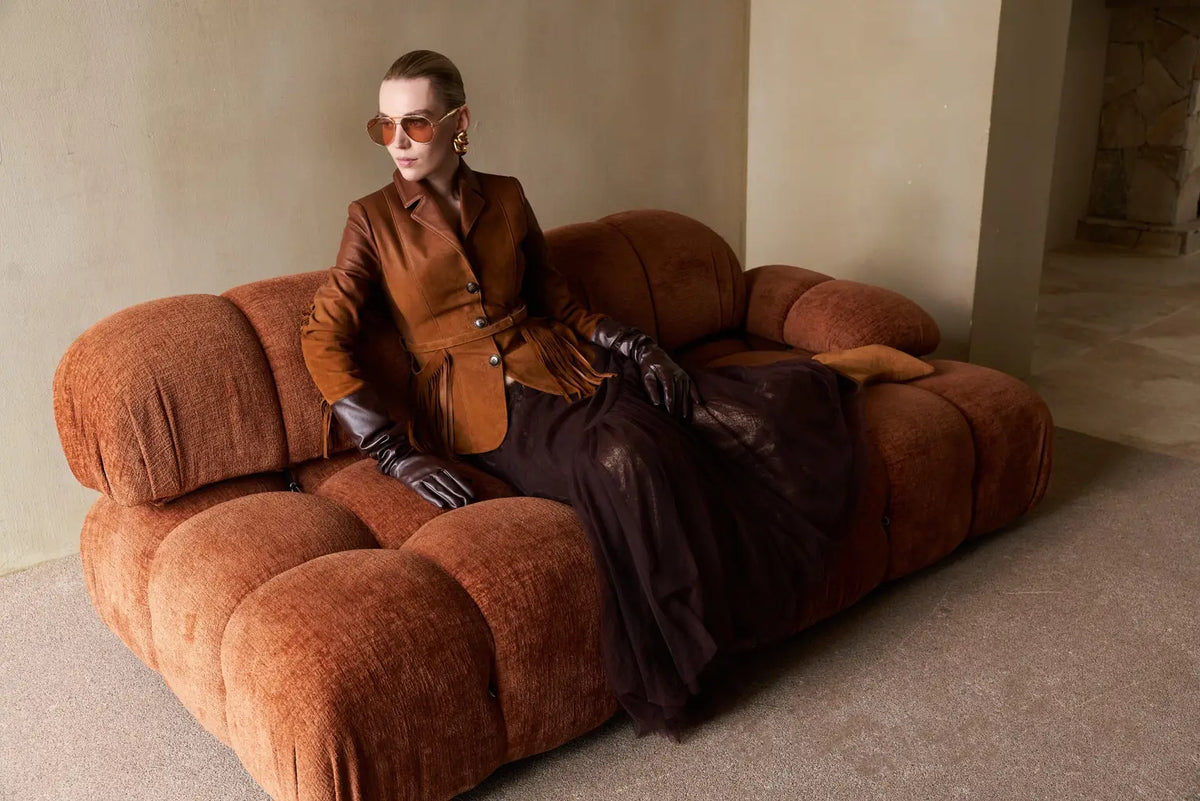
A jacket can change the temperature of a room before a word is spoken. The same is true of a sharply cut trouser, a sculptural knit, or a skirt that holds its line as you move. Structured clothing for women is not about dressing rigidly. It is about choosing pieces with intention - clothes that create presence, define proportion, and still belong to a full day in motion.
For the woman moving from a morning meeting to dinner, from New York to London, or from a gallery opening to a late reservation, structure offers something more lasting than an occasion-specific look. It offers a point of view.
What Makes Clothing Feel Structured?
Structure begins with construction. Consider a tailored shoulder that creates a clean frame, a defined waist that shifts the balance of a silhouette, or a trouser with enough shape to maintain its form through a long day. These details guide the eye. They bring clarity to an outfit without requiring excess.
It is often a quiet equation: considered cut, purposeful proportion, and material with enough body to hold the design. A sculptural outer layer can make a simple base feel resolved. A precise skirt can lend focus to soft knitwear. A corset-inspired trouser can introduce tension between strength and sensuality.
The effect is not always severe. The best structured pieces retain ease. They allow you to sit at a desk, cross a terminal, reach for a glass at dinner, and feel like yourself throughout. Form should support movement, not compete with it.
Why Structured Clothing for Women Has Staying Power
A highly decorative piece can be memorable, but structure is memorable in a different way. It changes how the wearer occupies space. A strong shoulder refines a relaxed trouser. A long, clean coat lends authority to a simple knit and flat shoe. The garment does not need to announce itself to be felt.
This is why structured dressing works across more than one setting. It can read polished at work, composed in transit, and quietly dramatic after dark. The same jacket that sharpens a daytime uniform can become the defining layer over a skirt and heel in the evening. Its value lies in that range.
There is a useful distinction here. Structured does not mean formal, and it does not mean every element of an outfit needs to be tailored. In fact, a head-to-toe architectural look can feel overly controlled if the occasion calls for softness. Contrast is what gives structure its energy: a fitted silhouette with an easy knit, strong outerwear with fluid movement beneath it, a precise trouser with an unstudied shoe.
The Architecture of Proportion
The most compelling outfits usually begin with proportion, not color. Before deciding on accessories, look at the relationship between the shoulder, waist, hem, and shoe. This is where structured clothing earns its place in a wardrobe.
Start with one defining line
Choose one piece to lead. It might be a jacket with an intentional shoulder, trousers with a directional shape, or a skirt that sits with precision at the waist. Let that item establish the silhouette, then keep the surrounding pieces more restrained.
If the jacket is voluminous, a closer-fitting base can create balance. If the trousers are slim and elongated, a substantial knit or abbreviated outer layer can bring dimension. There is no universal formula, because height, personal style, and context all matter. The aim is not symmetry. It is visual confidence.
Keep the palette considered
Structure shows itself most clearly when the eye is not distracted by too many competing elements. Neutrals, tonal dressing, and deep color stories allow cut and texture to do the work. That does not mean an outfit must be quiet. A single saturated accent, a tactile suede finish, or a contrasting shoe can be enough to shift the mood.
For travel, this approach is especially useful. A compact palette makes packing easier while preserving the feeling of a complete wardrobe. One structured jacket can move between a daytime appointment in Paris, an afternoon walk, and an evening table without asking you to become someone else between settings.
Leave room for softness
Structure becomes more wearable when it meets something relaxed. A crisp tailored layer over fine knitwear. Defined trousers with a simple tee. A sculptural skirt balanced by a softer top. These combinations keep the look modern because they feel lived in rather than overly composed.
The goal is not perfection. A sleeve pushed up slightly, a collar left open, or a flat shoe chosen instead of a heel can create the ease that lets a strong silhouette feel personal.
Building a Structured Wardrobe, Piece by Piece
Investment dressing works best when each piece has a role. Rather than collecting statement items that only make sense in isolation, build around garments that can alter the rest of your wardrobe.
Begin with outerwear or tailoring. A jacket with a distinct cut is often the most efficient starting point because it can transform what is already in your closet. It can give denim direction, make a simple dress feel intentional, or bring composure to knitwear on a day when comfort is nonnegotiable.
Next, consider the lower half. Well-cut trousers and skirts create a foundation that is easy to overlook until it is missing. They determine the pace of an outfit. A trouser with a clean line can carry you through a workday with flats, then into the evening with a change of top and jewelry. A structured skirt can do the same, especially when paired with layers that shift according to the season.
Then add a piece with tension: a suede corset trouser, a sculptural knit, or an outer layer with an unexpected volume. This is where the wardrobe becomes recognizably yours. One directional element is often enough. It gives familiar separates a new context without making every day feel like an event.
Where Structure Belongs in Real Life
The Everyday Edit is not reserved for the office. Structure can be useful on the days that require you to be visible but mobile: coffee meetings, presentations, a lunch across town, an impromptu invitation after work. The right garment holds the look together when the schedule does not.
For city escapes, the emphasis shifts toward layers. A jacket that works over knitwear, a skirt that pairs with boots or a refined flat, and trousers that maintain their line after hours in transit are more valuable than pieces designed for one photograph. A limited wardrobe can still feel expansive when its silhouettes speak to one another.
After hours, structure takes on a different character. It becomes a form of restraint. Instead of relying on embellishment, let a sharp neckline, a defined waist, or the tactile contrast of suede against a fine top create the impact. The result is considered without feeling rehearsed.
The Details Worth Paying Attention To
When choosing structured pieces, look beyond the first impression. Notice whether the garment holds its shape when you move, whether the seams sit cleanly, and whether closures, pockets, and linings support the design rather than interrupt it. These are not secondary details. They determine whether a piece feels composed only on a hanger or remains composed through a real day.
Fit matters, but not as a pursuit of restriction. A jacket may be designed to stand away from the body. A trouser may need a longer break over the shoe. A skirt may be intended to sit at a particular point on the waist. Read the silhouette before judging the size, and make room for alterations when a piece has the construction to merit them.
Also consider repetition. Ask whether you can imagine wearing the piece three different ways, in three different places. If the answer is yes, it has the potential to become part of your visual language rather than a moment apart from it.
Structure is a choice to dress with clarity. Not armor. Not costume. Just a considered line, a purposeful shape, and enough ease to let the life inside the clothes remain visible.
Explore the HSW edit
Discover pieces from HSW that bring these styling ideas into your wardrobe.

