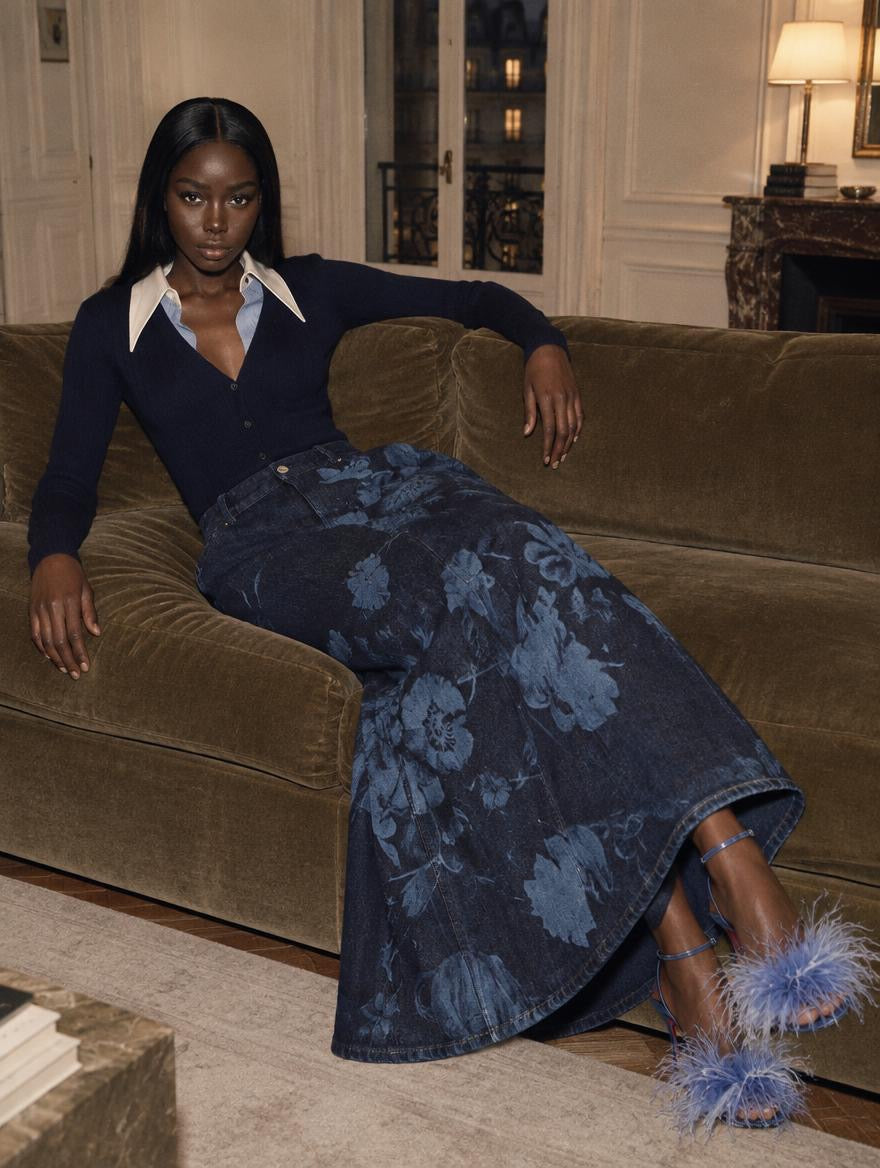
A wardrobe becomes more personal when it cannot be replicated at every table, airport lounge, or city corner. Limited edition designer clothing offers that distinction, but its value goes beyond rarity alone. The right piece holds its own in a full life: arriving sharp for a New York meeting, layered for London in late autumn, or carrying the mood of an after-hours dinner without asking to be changed out of.
For the woman who dresses with intention, limited runs are not about collecting clothing for its own sake. They are about choosing fewer pieces with more point of view. A sculptural jacket. A pair of precisely cut trousers. A knit with enough presence to make the rest of the look feel resolved.
What Limited Edition Designer Clothing Really Means
“Limited edition” is often treated as a shorthand for scarcity. Scarcity matters, certainly. It protects the feeling that a garment belongs to a considered world rather than a mass uniform. But it should not be the only reason to invest.
The more meaningful definition begins with design discipline. A limited run gives a label room to concentrate on proportion, fabrication, finish, and the small decisions that change how a garment lives on the body. The shoulder line that creates poise. The weight of an outer layer. The placement of a seam that lets a structured silhouette move with ease.
This is where limited edition designer clothing earns a place in an investment wardrobe. It is not simply difficult to find. It is designed to remain interesting after the first outing, and capable enough to return to again and again.
Scarcity Has a Place, but Wearability Decides Everything
A rare piece that never leaves the wardrobe is only half an investment. The strongest limited editions balance visual authority with genuine range. They offer a clear silhouette, then make room for the wearer to interpret it.
Consider a sharply tailored jacket. With trousers and a fine knit, it can set the tone for the workday. Over a simple dress, it changes the scale of an evening look. Thrown over denim for travel, it brings structure to an otherwise relaxed uniform. Its character stays intact, while its role shifts.
That range is especially valuable for women whose calendars do not divide neatly into categories. A morning presentation may lead to a late reservation. A flight to Paris or Dubai may include both a meeting and a private dinner. Clothing must travel well across context, not merely photograph well in one.
The trade-off is worth acknowledging. A statement silhouette will never behave like a basic. It may ask for more intention in styling, and it may become the focal point of an outfit every time it is worn. That is precisely the appeal for some wardrobes. The key is selecting statements that still work with the pieces you already reach for.
The Architecture Is in the Construction
The difference between an ordinary garment and a lasting one is often felt before it is seen. A considered piece has a certain internal logic: fabric, cut, and proportion are working toward the same idea.
Look at how a garment holds its shape when it is not being posed. Does the collar sit cleanly? Do the trousers retain their line through movement? Does a waist detail create structure without making the piece feel restrictive? These questions reveal more than a dramatic first impression can.
Material also changes the emotional register of a look. Suede can bring depth and softness to an architectural silhouette. Knitwear can create contrast against tailored trousers. A substantial outer layer can make even restrained separates feel deliberate. The aim is not excess. It is tension, resolved with restraint.
At HSW, that philosophy appears through limited-run ready-to-wear designed around strong tailoring, tactile materiality, and real movement. The result is clothing with presence, without the sense that it belongs only to a single occasion.
Build the Look Around One Decisive Piece
The most effective way to wear a limited-edition piece is often the least complicated. Let one element lead, then give it space.
If the jacket has sculptural volume, keep the layer beneath it close and clean. If the trousers are the statement, choose a top that respects their line rather than competing with it. If a skirt brings texture or shape, a fine knit or simple shirting can create the right counterweight.
This is not a rule against drama. It is a way of directing it. A wardrobe with a strong visual language benefits from contrast: soft against structured, matte against tactile, tailored against relaxed. Confidence in contrast is often more memorable than a look where every detail asks for equal attention.
Color should work in much the same way. A considered palette allows unusual construction to feel surprisingly easy to wear. Neutrals can ground a directional piece; a controlled tonal look can make its proportions feel even more intentional. When the silhouette is doing the speaking, the rest of the outfit can speak quietly.
Choose for Your Actual Calendar
Before bringing home a limited-run garment, picture it in movement. Not in a dressing room. In the moments that make up your life.
Would you wear it for a client lunch, then continue to dinner without feeling overdone? Could it anchor a compact travel wardrobe for a long weekend in Riyadh, London, or the South of France? Does it work with the shoes and bags already in rotation? Can you imagine at least three distinct settings for it within the next season?
These are practical questions, but they protect the pleasure of a special purchase. A garment becomes more valuable when it has a relationship with your life. A city-ready outer layer may answer the need for polish on travel days. Elevated separates may be what you wear when the invitation says dinner but the atmosphere calls for more than expected.
It also depends on what is currently missing from your wardrobe. If you already own excellent trousers, a distinctive jacket may offer greater range. If your outerwear is complete, a sculptural skirt or suede corset trouser may create more new possibilities. The best addition is not always the most dramatic piece. It is the one that changes the most existing outfits.
Care Is Part of the Ownership Experience
Limited pieces deserve a little attention because their life is extended through it. Give structured garments breathing room in the closet. Use hangers that support shoulders properly. Avoid overfilling garment bags, which can flatten shape and texture. Follow the care instructions closely, particularly for pieces with specialized materials or detailed construction.
More subtly, care also means wearing a piece with confidence rather than saving it for a moment that may never arrive. A garment made with intention should be part of your life, not held apart from it. The goal is not to preserve it untouched. It is to preserve what makes it compelling while allowing it to gather memories.
A Wardrobe With a Point of View
There is a particular satisfaction in getting dressed without looking interchangeable. Limited editions support that feeling because they invite a more edited approach: less accumulation, more authorship. Each garment can carry a role, a mood, and a reason for being there.
The lasting pieces are rarely the ones that demand constant novelty. They remain because their construction keeps revealing itself, their silhouette still feels current to the woman wearing them, and their versatility makes them part of the life she is already building. Choose the piece that gives your existing wardrobe a new line, then let it move with you.
Shop HSW Limited Pieces
Each piece is produced in a limited run, made to be returned to again and again.

The Mercer Jacket — a signature piece designed to transform even the simplest look.

The Vendôme Jacket — a leopard coat in faux mink, shaped around the waist rather than the print.

The Ginza Set — a sculpted merino-wool bomber with a matching skirt: soft structure, one complete silhouette.