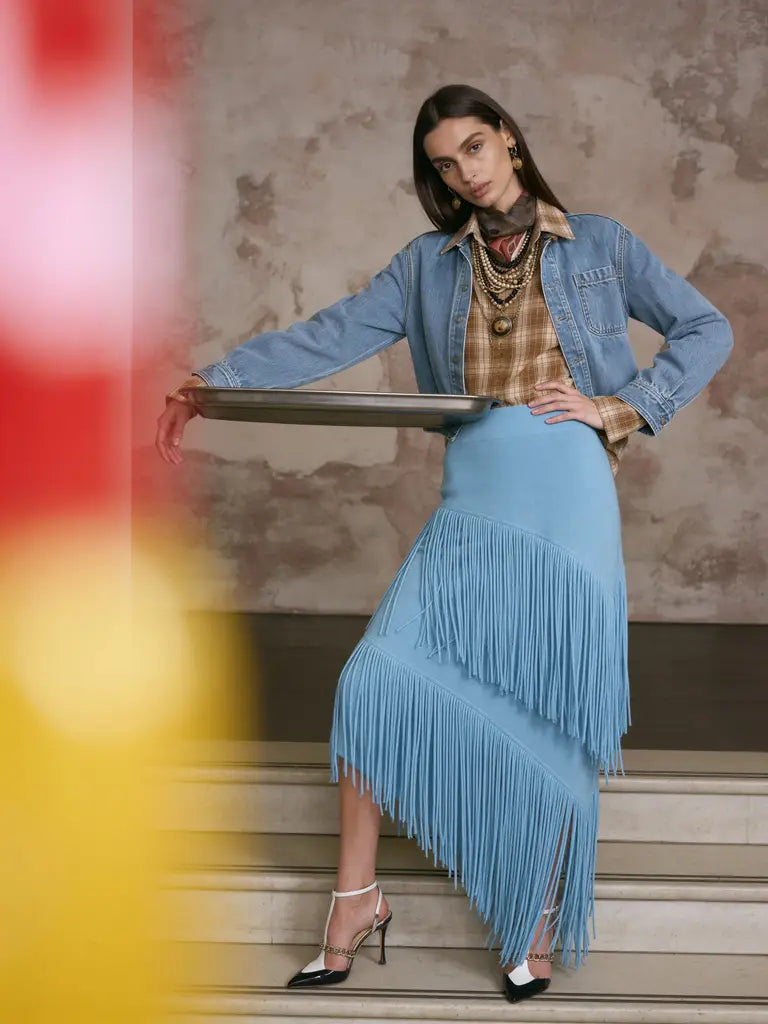
A wardrobe can be full and still leave you with nothing that feels right. The issue is rarely a lack of clothing. It is a lack of connection between the pieces, the life you lead, and the point of view you want to project. Learning how to build an intentional wardrobe begins there: not with rules, but with a clearer sense of what deserves a place in your daily rotation.
An intentional wardrobe is not minimal by default. It can be spare, expansive, monochrome, or full of contrast. What matters is that every piece has purpose. It works with the rest of your wardrobe, supports the way you move through your week, and feels recognizably yours.
Begin With the Life You Actually Dress For
Start with reality, not aspiration alone. Consider the settings that shape your month: the client meeting in New York, a long lunch in Dubai, a gallery opening, a flight to London, a dinner that begins late and ends later. Your wardrobe should meet these moments without requiring a different identity for each one.
Look at the last two weeks of outfits you wore, not only the ones you planned. Notice what you reached for when time was short. Notice what made you feel composed. Just as useful: notice the pieces left untouched because they were too precious, too difficult, too specific, or simply unlike you.
This is where many wardrobes become fragmented. A beautiful piece can still be an unhelpful purchase if it only works for an imaginary calendar. The goal is not to remove occasion dressing. It is to choose occasion pieces with enough intelligence to return to them.
Define Your Three Most Frequent Dressing Modes
Most women need fewer categories than they think. Try naming three modes that account for the majority of your life. They may be polished daily dressing, travel and city movement, and after-hours plans. Or perhaps creative workdays, social evenings, and formal occasions.
The names are less important than the clarity. Once your modes are defined, you can assess every item with a more useful question: where, exactly, will I wear this? A strong tailored trouser might belong to all three. A sculptural jacket may shift a simple base layer into something more deliberate. A skirt can feel equally right with a fine knit at lunch or a sharper top after dark.
How to Build an Intentional Wardrobe Around Silhouette
Color matters. Fabric matters. But silhouette often does the most enduring work. It determines how a garment holds space, how it changes posture, and how it relates to the rest of your wardrobe.
Choose a small set of shapes that feel aligned with your presence. You may prefer a defined shoulder, a long clean line, a high-waisted trouser, a fitted waist against a more generous outer layer, or a column of tonal dressing. These preferences become your visual language.
There is no need to select one uniform silhouette forever. In fact, contrast is often what keeps a wardrobe alive. A structured jacket beside fluid knitwear. A precise corset detail with a relaxed coat. A sharp trouser offset by a softer, tactile layer. The point is to make those contrasts intentional rather than accidental.
When evaluating a new piece, ask whether it reinforces one of your existing shapes or introduces a new one with a clear role. If it does neither, it may be visually compelling but difficult to integrate.
Build Outfits, Not Isolated Purchases
A considered purchase should create more than one possibility. Before adding it to your wardrobe, picture at least three complete looks using items you already own. Not vague styling potential. Actual combinations you would wear.
For example, an architectural outer layer may work over tailored trousers for daytime, with a skirt for an evening reservation, and over knitwear for travel. A statement piece earns its place when its character remains intact across different settings.
This is also where proportion becomes practical. If you invest in volume on top, make sure you own bottoms that balance it. If your wardrobe leans toward wide trousers, consider the fitted or cropped layers that give them definition. Intentional wardrobes are built through these relationships.
Edit for Friction, Not Just Excess
The most useful wardrobe edit is not about achieving a certain number of hangers. It is about identifying friction.
Friction is the blouse that needs a particular underlayer you never wear. The jacket that looks striking but restricts movement. The trousers that only work with one pair of shoes. The dress that feels disconnected from every coat, bag, and layer you own.
Set aside pieces that create repeated hesitation. You do not need to make an immediate, permanent decision about all of them. A seasonal storage period can be revealing. If you do not miss an item when the relevant weather or occasion returns, you have your answer.
Be careful, though, not to edit away everything distinctive in pursuit of ease. A wardrobe composed entirely of agreeable basics can become visually mute. Keep the pieces that make a statement in movement, provided they still have a place in your actual life. The distinction is between a piece with presence and a piece that creates costume.
Choose Materials and Construction You Want to Live In
An intentional wardrobe asks for discernment beyond the mirror. How does a garment feel after several hours? Does it travel well? Can it be layered? Does the construction hold its shape and allow you to move naturally?
Quality is not only about appearance at the moment of purchase. It is about the relationship you can build with a piece over time. Consider the finish of the seams, the weight and recovery of the material, the way closures sit, and whether the garment feels considered from every angle.
Some pieces are worth choosing for their precision. Others earn their place because they soften and become familiar. Ideally, your wardrobe contains both: structure for definition and texture for depth.
HSW approaches this balance through architectural ready-to-wear designed for real movement. A limited-run statement piece should not require a special version of your life. It should sharpen the one already in progress.
Establish a Personal Color Framework
A color palette does not have to mean dressing in neutrals only. It means identifying the shades that make coordination easier and your wardrobe more coherent.
Begin with two or three foundational colors that appear across your major pieces, then add a smaller group of accents. Your foundations might be black, cream, deep brown, charcoal, navy, or another shade that works consistently with your outerwear and shoes. Accents can be richer, brighter, or more unexpected, but they should still connect back to the base.
Pay attention to contrast as much as color. Some women feel most themselves in tonal layers. Others need the graphic clarity of light against dark. Once you know which approach gives you confidence, getting dressed becomes less about matching and more about composing.
Let Your Wardrobe Evolve at a Deliberate Pace
An intentional wardrobe is never truly finished. Careers shift. Cities change. Travel becomes more frequent, or less. Your social life may ask for a new kind of visibility. The answer is not to replace everything each season. It is to make smaller, more precise additions as your life changes.
Keep a running note of genuine wardrobe gaps. Write them down when they occur, then wait. If the need remains after a few weeks, it is probably real. If it disappears, it was likely a passing impulse or a problem that could be solved by styling what you already own differently.
This pause creates room for better decisions. It also lets you recognize when one exceptional piece can do more than several minor additions. A wardrobe with a point of view is built through patience, repetition, and the confidence to leave some space unfilled.
The most compelling wardrobes do not announce how much was acquired. They make the wearer feel clear, prepared, and entirely herself - whether she is crossing a city, entering a room, or deciding what comes next.
Shop the Edit
Three considered pieces to build an intentional wardrobe around, each made to be worn again and again.

The Como Cardigan — one piece for a life in motion, from the first appointment to an evening reservation.

The Ginza Set — a sculpted merino-wool bomber with a matching skirt: soft structure, one complete silhouette.

The House Skirt — a knitted pencil skirt interrupted by diagonal fringe. Ready to ship.