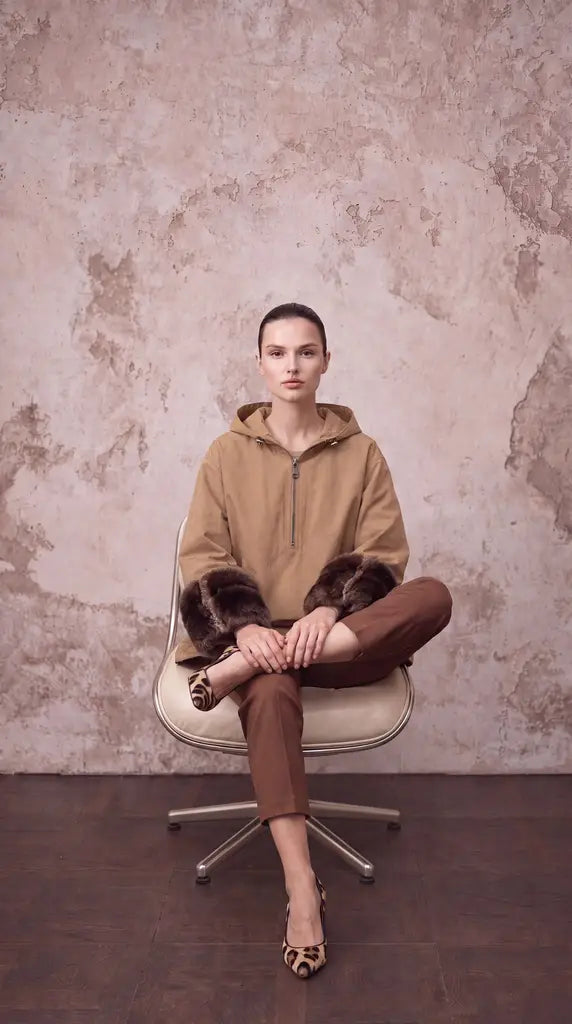
A luxury raincoat women reach for repeatedly does more than answer a wet forecast. It protects the line of an outfit, brings composure to the commute, and makes arrival feel intentional. The difference is rarely a loud detail. It is proportion, weight, finish, and the quiet confidence of a garment that keeps its shape when the day does not.
For a woman whose calendar moves between meetings, airports, dinners, and city streets, outerwear cannot be an afterthought. It is often the first thing seen and the last thing removed. A raincoat should meet that moment with purpose.
What Makes a Luxury Raincoat Different?
Luxury begins with how a raincoat behaves in real life. The fabric must offer weather protection without feeling overly technical or stiff. The cut should allow enough room for knitwear or tailoring underneath, while retaining a defined silhouette when worn open. Hardware, closures, lining, and finishing should feel considered because they are the details encountered every time the coat is fastened, folded, or carried.
More importantly, it needs a point of view. A generic rain layer solves one problem: staying dry. A refined outer layer also gives shape to the rest of the wardrobe. It creates a clean vertical line over wide-leg trousers, brings restraint to a sculptural skirt, and lends an unexpected edge to an evening look when weather changes after dark.
That is the standard worth considering: not whether the piece is practical enough to own, but whether it is compelling enough to wear.
The Silhouette Sets the Tone
The strongest luxury raincoats for women begin with proportion. A coat that is too fitted can feel restrictive over tailoring. One that is too oversized can lose its presence, particularly when paired with fluid trousers or a longer skirt. The most versatile shapes leave room to move while holding a deliberate outline.
A belted silhouette brings definition and a more feminine sense of structure. It works well for city days that move into dinner, especially when worn over a fine knit and tailored pants. A straighter, more architectural cut has a different energy: graphic, composed, and slightly more directional. It is the kind of outerwear that can make simple foundations feel finished.
Length changes the equation. A shorter raincoat can be useful for driving, quick errands, and casual city movement. It also works naturally with high-waisted trousers and boots. A longer length offers greater coverage and a more dramatic line, particularly effective for travel or a rain-soaked walk across New York, London, or Paris. Neither is inherently better. The right choice depends on the life the coat needs to accompany.
Structure Without Stiffness
Architectural outerwear should not mean armor. The aim is a shape that holds its intention while allowing the wearer to move through a full day. Look for thoughtful volume through the sleeve, a collar that frames rather than overwhelms the face, and a closure that feels secure without interrupting the silhouette.
This is where construction becomes visible, even when it is not overt. A well-resolved coat does not pull across the back when layered over a blazer. Its sleeves do not fight a knit. Its hem does not collapse into an untidy shape after a taxi ride or a long flight. These are quiet signs of design that respects movement.
Choose Material for the Life You Actually Lead
The best material is not always the most technical one. It is the one that suits your climate, your routine, and the way you prefer to dress.
For frequent travelers, a lighter layer that packs with relative ease may matter most. For colder, wetter city seasons, a raincoat that accommodates soft layers underneath becomes more valuable. If much of your time is spent moving between car, office, and restaurant, you may prioritize surface refinement and silhouette over heavy-duty utility.
The trade-off is simple. The more protective a coat becomes, the more carefully its design must manage bulk. The more elegant and lightweight it becomes, the more it may be suited to showers rather than prolonged rain. A luxury purchase is not about choosing the most features. It is about choosing the right balance.
Color deserves the same consideration. Black offers graphic certainty and works across nearly every setting. Deep neutrals and earth tones can feel softer, especially against tailoring in cream, charcoal, or chocolate. A lighter neutral brings brightness to gray weather but asks more of your day-to-day care. Choose the shade that will still make sense beside the clothes you already love, not only against a clean product image.
How to Style a Luxury Raincoat Beyond the Forecast
A raincoat earns its place when it can move beyond rain. Consider it a framing piece, not an isolated utility layer.
For work, wear it over precise trousers, a fine-gauge knit, and leather shoes with a clean toe. The coat should add length and authority without making the outfit feel overly formal. If the silhouette has volume, keep the layers beneath considered and close to the body. If the coat is more streamlined, a wider trouser or sculptural knit can create a confident contrast.
For travel, build from pieces that hold their own when separated: relaxed tailoring, a knit, trousers with movement, and one pair of shoes that can carry the day. The raincoat is the anchor. It gives the look a clear finish at the airport, through a transfer, and on the first walk through an unfamiliar neighborhood.
After hours, let the contrast do the work. A defined raincoat over a sleek skirt or elevated separates can feel more modern than a conventional evening layer. Keep the palette restrained and let texture, proportion, and a precise accessory create the shift. The result is not precious. It is composed.
The Fitting Details That Matter Most
A raincoat should be tried on with the layers you realistically expect to wear. Raise your arms. Sit down. Fasten it fully. Wear it open. Notice where the shoulder seam falls and whether the collar sits with ease.
Pay attention to the sleeve length, particularly if you wear watches, bracelets, or longer knit cuffs. Consider the pocket placement too. Pockets should be useful without changing the coat's line when you use them. These details may sound minor, but they determine whether a piece remains in rotation or stays waiting for an occasion that never arrives.
It is also worth asking whether the coat supports your strongest wardrobe pieces. Does it work over your favorite trousers? Does it sharpen a simple dress? Will it travel well with the boots and bags you already use? Investment dressing becomes more intelligent when each new piece expands the possibilities of what is already there.
A Piece for Movement, Not Just Weather
The most enduring wardrobe pieces understand context. They do not demand a special outing to justify themselves. They make the everyday feel more resolved: an early meeting in Dubai, a wet afternoon in London, a dinner reservation after a long day, a departure gate with nowhere to hide behind casual clothes.
HSW approaches outerwear with that same idea of presence in motion. Structure is not separate from wearability. It is what gives a garment its clarity as the wearer moves through different rooms, climates, and versions of her day.
A luxury raincoat is not meant to be saved for a storm. Choose one with enough strength of silhouette and enough ease of function that you reach for it whenever the day asks for composure.