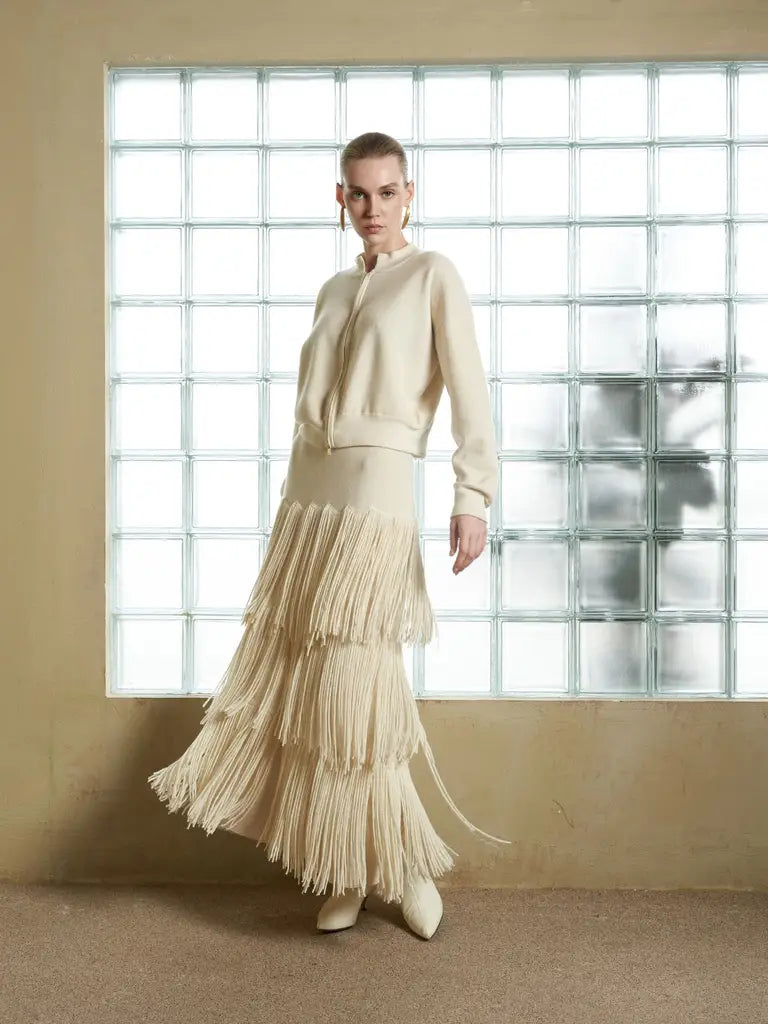
The matching knit set women reach for on a compressed morning has to do more than look composed. It has to hold its line through a meeting, a car ride, a late reservation, and the small changes of temperature that define city life. This is the appeal of the set at its best: a complete point of view, already in motion.
A matching knit set is not a shortcut to getting dressed. It is a study in proportion. The same tone across two pieces creates visual continuity, while the knit introduces softness, texture, and ease. When the cut is considered, the result feels deliberate rather than overly coordinated. Quietly commanding. Never overworked.
Why Matching Knit Sets for Women Endure
Separate pieces ask the eye to make sense of contrast. A matching set removes that question, then leaves room for more interesting decisions: the architecture of a coat, a sharp boot, a sculptural earring, a bag with a distinct handle. The foundation is resolved, but the look is not finished for you.
That distinction matters. The most enduring wardrobes are not built from outfits that only work one way. They are built from pieces that establish a strong silhouette together, then retain their character apart. A knit top and knit skirt may create a column of color for dinner. The same top can later meet tailored trousers; the skirt can be offset by a crisp shirt, substantial jacket, or long outer layer.
There is also a practical reason this pairing has staying power. Knits bring a sense of ease to polished dressing. They move with the body and soften the formality of a structured setting without making the wearer appear underdressed. For women whose days cross several worlds, that flexibility is not incidental. It is the point.
The Difference Is in the Line
Matching does not automatically mean flattering or refined. It depends on where the pieces begin and end, how closely they follow the body, and whether the visual weight is balanced. A cropped knit paired with a higher-waisted bottom creates one kind of tension. A longer top worn over a narrow skirt creates another. Neither is universally better. The question is whether the proportions feel intentional for the occasion and for the way you prefer to move.
Look first at the shoulder, waist, and hem. These are the places that define the set before color or accessories enter the conversation. A clean shoulder gives a knit top presence. A waistband that sits where you naturally want definition can make the whole look feel more settled. A hem with purpose, whether it lands at the hip, below it, or at the ankle, gives the eye a clear place to rest.
How to Choose a Matching Knit Set With Structure
The right knit set should feel composed before styling begins. That does not require stiffness. It requires enough construction for the garment to keep its shape, enough texture to catch the light, and enough ease that you are not adjusting it all day.
Begin with the silhouette you need most often. If your wardrobe is built around meetings, galleries, and dinners, a set with a defined shoulder or a more streamlined lower half may offer the right degree of polish. If travel shapes your calendar, consider how the pieces will layer beneath outerwear and whether each one can work independently once you arrive. A considered set earns its place by doing both.
Color changes the effect. A single dark neutral can create a lengthened, graphic line, especially when shoes remain within the same tonal family. Lighter neutrals read softer and more textural, but they ask for attention to fit and finishing. A more distinct shade can become the focus of the look, best supported by accessories that do not compete for attention.
Texture deserves equal consideration. Fine knitwear can feel precise and close to the body, while a more dimensional knit has visual depth and a stronger presence from a distance. There is no fixed rule. A fine gauge may be the answer beneath a sharply cut coat; a textured knit can make a simple silhouette feel complete with very little added.
Fit Should Leave Room for Life
A set can look exceptional standing still and fail the moment you sit down. Test it in the positions that make up your actual day. Raise your arms. Sit at a table. Walk quickly. Notice whether the waistband stays where it should, whether the top pulls across the chest or back, and whether the skirt or pants retain a confident line.
This is particularly relevant when choosing a close-fitting knit. Closeness should feel like intention, not constraint. A slight ease through one element often gives the look more sophistication: a fitted top with a fluid skirt, or a slimmer bottom with a knit that has a more defined shoulder. Confidence in contrast is often created through this balance.
Styling a Knit Set Across the Day
For daytime, let the set establish the silhouette and add one element of structure. A tailored jacket, long coat, or precise leather accessory can sharpen the softness of knitwear without overwhelming it. Shoes determine the register. A polished flat or boot keeps the look grounded; a heel shifts it toward a more formal setting.
For travel, keep the palette restrained and let the set work as a base layer. A matching knit top and bottom can feel resolved after hours in transit, particularly when paired with outerwear that has shape. On arrival in London, New York, or Dubai, change the shoe and add a more directional piece of jewelry rather than rebuilding the entire outfit. The continuity is useful. It also looks intentional.
For after hours, resist the impulse to add too much. A knit set already carries the visual authority of a complete look. Expose a clean neckline, add a strong cuff or earring, and choose a bag with presence. If the set is streamlined, an architectural jacket can create drama. If it has texture or a more expressive silhouette, keep the surrounding elements spare.
The strongest styling choice may be subtraction. Matching pieces create a frame, and a frame needs space around it. When every detail asks to be noticed, the silhouette loses clarity.
Wear the Pieces Apart, Without Losing the Point
The value of a matching knit set is not limited to the days it is worn together. Separating the pieces extends its vocabulary while preserving its character.
A knit top can bring softness to tailored pants, a structured skirt, or denim with a clean, dark wash. The key is to maintain a similar level of intention below the waist. If the knit has a refined line, pair it with pieces that are equally resolved rather than overly casual.
A knit skirt or knit pants can be grounded with a crisp poplin shirt, a close-fitting tee, or a substantial jacket. This is where contrast becomes useful: matte against shine, softness against tailoring, a long fluid line against a cropped, more structural top. The pieces should not look accidental together. They should look like a conversation between different forms.
When repeating a set across a week, change the outer layer first. The same knit foundation can appear minimal beneath a long coat, directional beneath a sculptural jacket, or relaxed with a simple layer tied at the shoulders. The silhouette remains familiar, but its setting changes.
Care Is Part of the Investment
Knitwear rewards a slower approach. Give it a rest between wears when possible, fold rather than hang pieces that may stretch, and follow the individual care label rather than relying on habit. A little attention preserves the line that made the set compelling in the first place.
It is also worth noticing how a knit changes over time. Some pieces become more personal with wear, settling into the rhythm of your movement. Others reveal that they were not constructed to hold their shape. This is why considered materiality and construction matter long after the first outing.
A matching knit set does not need a special occasion to justify itself. It needs a life with movement in it. Choose one with a silhouette you trust, let it carry the morning, and leave space for the rest of the day to take shape around you.