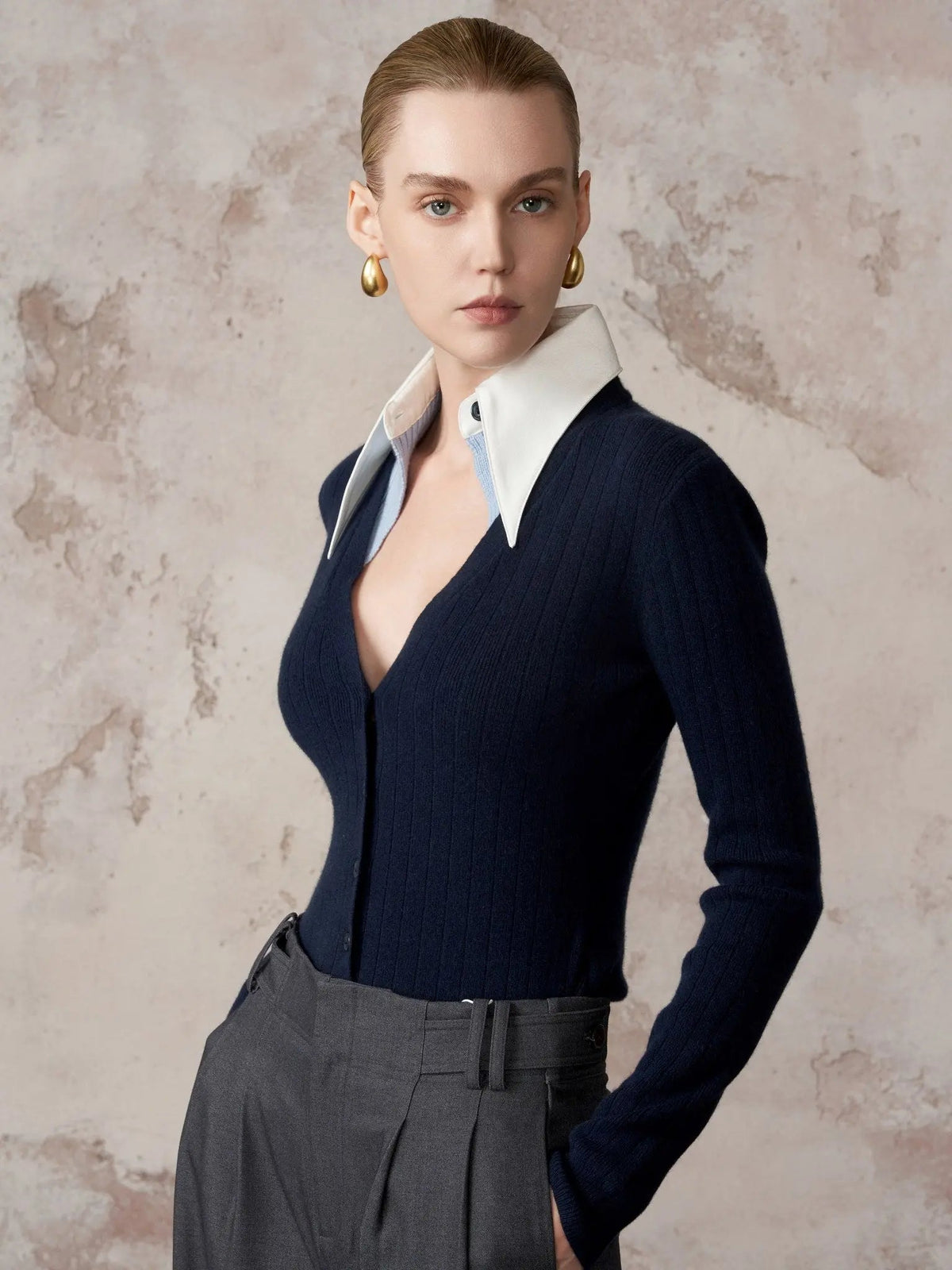
A knit does not need to disappear into the background. Tailored knitwear for women gives softness a point of view: a defined shoulder, a considered neckline, a line that holds its intention from morning meetings to late reservations. It is comfort with composure - clothing that moves easily, yet never feels incidental.
For a woman whose calendar crosses work, travel, and after-hours plans, this distinction matters. The right knitwear layer can carry the ease of something familiar while bringing the authority of tailoring. It makes a simple trouser feel more resolved. It gives a skirt a sharper counterpoint. It earns its place in a wardrobe because it works hard without looking like it is trying.
What Makes Knitwear Feel Tailored?
Tailoring is often associated with woven cloth, sharp lapels, and structured jackets. In knitwear, the effect comes from proportion and construction rather than stiffness. The garment has direction. Its shape frames the body instead of merely covering it.
Look for a clean shoulder line, sleeves that finish with purpose, and ribbing or seams that guide the eye rather than add decoration. A substantial knit can create a stronger silhouette, while a finer gauge may offer a more precise, close-to-the-body line. Neither is inherently better. The decision depends on how you want the piece to perform.
A more sculptural knit creates presence, especially beside fluid skirts or relaxed trousers. A refined, compact layer can sit comfortably beneath outerwear and move through a long day with less visual weight. The common thread is clarity. Tailored knitwear has an intentional relationship to the rest of the look.
It is also defined by restraint. Not every knit needs volume, texture, or ornament. Often, the most commanding pieces are distinguished by a precise cut, a compelling proportion, and a finish that remains polished after hours of wear.
Tailored Knitwear for Women in a Working Wardrobe
The modern work wardrobe asks for more than formality. It needs range. A woman may begin her day in a studio, present in a boardroom, step into a car for the airport, then meet friends without returning home to change. Knitwear becomes essential when it can meet each setting with the same quiet confidence.
Pair a structured knit with tailored trousers when you want definition without the formality of a full suit. The contrast is subtle but effective: softness against a clean trouser line, ease against precision. Choose a knit with enough shape to stand on its own, then keep accessories considered rather than excessive.
With a pencil or column skirt, a shorter or more fitted knit creates a disciplined silhouette. The proportions feel composed, especially when the hem sits deliberately at the waist rather than falling without shape. For presentations or client-facing days, this balance can feel more personal than a conventional shirt while remaining entirely assured.
A knit also changes the language of suiting. Worn beneath a sculptural jacket, it softens the architecture without competing with it. The result is not less powerful. It is more dimensional - a look built on confidence in contrast.
The Value of a Defined Shoulder
Shoulders establish posture before you say a word. In knitwear, a defined shoulder can make the entire silhouette feel more intentional, whether the piece is worn with denim, tailoring, or a long skirt.
This does not always mean exaggerated volume. It may be a clean set-in sleeve, a measured line at the upper arm, or a construction that prevents the knit from collapsing around the frame. The effect is particularly useful for travel days and long meetings, when you want the ease of knitwear without the visual softness of loungewear.
Build Looks Through Contrast, Not Complication
The strongest outfits rarely rely on one idea repeated from head to toe. They hold opposing elements in balance: structure and softness, matte and sheen, close-fit and volume, ease and precision.
A sculptural knit beside a fluid skirt feels modern because each element gives the other space. A fitted knit with wider trousers creates a long, clean line. A substantial layer paired with a sleek leather accessory introduces texture without making the look feel overworked.
Color matters here, too. A tonal palette lets silhouette and materiality lead, which is often ideal for a wardrobe built around repeat wear. Deep neutrals and grounded shades can move easily between New York meetings, London dinners, and a weekend in Dubai. When you choose a more expressive color, keep the surrounding pieces calm enough to let it register clearly.
The goal is not to make every outfit minimal. It is to make every choice legible. A statement is stronger when it has room around it.
How to Choose the Right Shape
There is no universal ideal in tailored knitwear. The most useful piece is the one that supports your own wardrobe rhythm.
If you wear high-waisted trousers and skirts, consider a knit with a hem that meets the waistband cleanly. It preserves proportion and reduces the need for constant adjustment. If your wardrobe leans toward longer layers, a slightly elongated knit can create an elegant vertical line, especially when paired with slim trousers or a narrow skirt.
Necklines should be selected for context as much as preference. A closer neckline can read crisp and graphic beneath outerwear. An open neckline brings softness and works well when you want jewelry, skin, or a sharply cut collar to become part of the composition. The question is not which neckline is most flattering in the abstract. It is what role you need it to play.
Consider the layers you already rely on. A knit meant for air-conditioned offices and flights may need a more compact profile. One intended as the focal point of an evening look can afford more volume, texture, or shape. Investment dressing begins with this kind of clarity: choosing pieces that answer a real need while still giving the wardrobe something new to say.
Care Is Part of the Design Conversation
A well-made knit deserves a different pace. Rotate it rather than wearing it on consecutive days when possible, and allow it to rest between outings. Fold instead of hanging if the garment has weight or structure that could stretch over time.
Care labels should always lead, particularly where fiber blends and finishing methods vary. In general, gentle handling, thoughtful storage, and addressing small signs of wear early help preserve the line of the garment. This is not preciousness for its own sake. It is respect for construction.
The same principle applies to styling. Let a tailored knit be seen in more than one way. Wear it with trousers for The Everyday Edit, under outerwear for a city escape, or with a sleek skirt when the invitation changes after dark. Its value grows through repetition, not reservation.
A Softer Kind of Authority
At HSW, structure is never only about severity. It is about giving the wearer a clear silhouette in which to move. Tailored knitwear belongs in that idea of dressing: tactile, architectural, and prepared for a life that does not stay in one room.
Choose the knit that makes the rest of your wardrobe feel more deliberate. The one that holds its shape, sharpens a familiar pairing, and feels right from the first appointment to the final table of the evening. Not simply a layer. A line of confidence, carried forward.
Shop the HSW edit
Discover the garments behind this styling guide.

