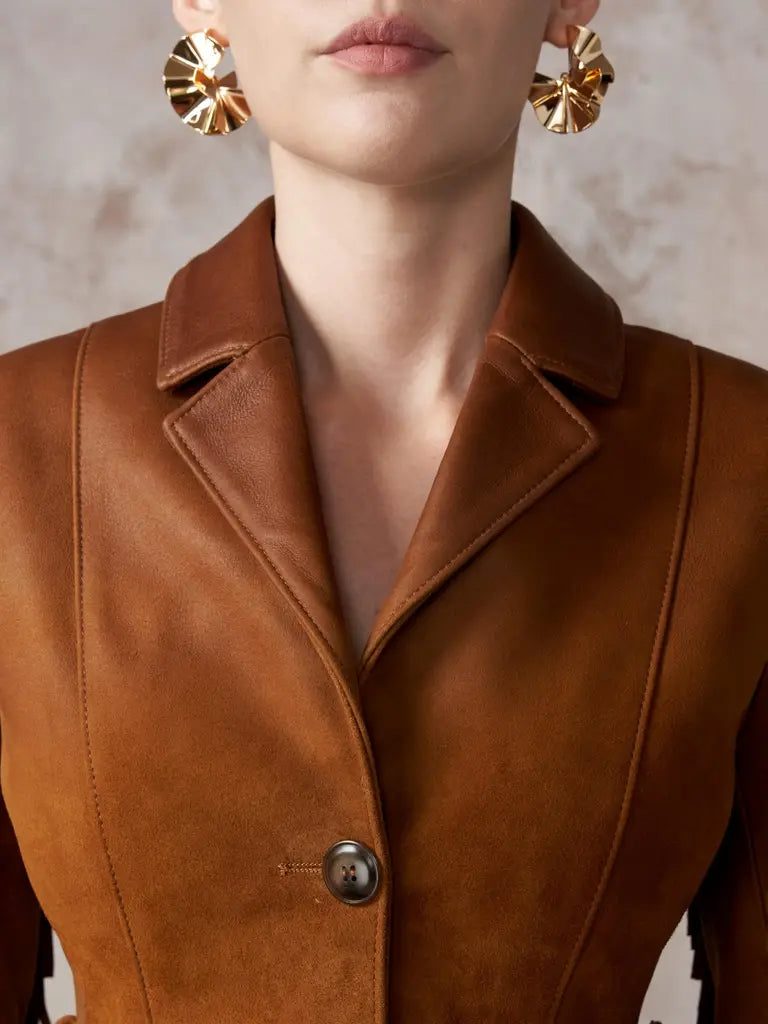
A jacket that holds its line as you cross a lobby. A trouser with enough precision to change the posture of an otherwise simple shirt. This is where the question, what is architectural fashion, becomes more than a definition. It is clothing designed with the same attention to proportion, volume, material, and negative space that gives a building its presence.
Architectural fashion does not ask the wearer to disappear behind the garment. It gives her a clearer outline. Structure, then movement. Drama, then restraint. A statement that works at a desk in New York, over dinner in Paris, or on an evening flight to Dubai.
What Is Architectural Fashion, Really?
Architectural fashion is a design approach that treats the body as a living form around which shape can be built. Its signatures are deliberate silhouettes, considered tailoring, sculptural volume, strong seams, and materials selected for how they hold, fold, or soften a line.
The word “architectural” can suggest clothing that is severe or difficult to wear. At its best, the opposite is true. The construction may be exacting, but the result should feel intuitive on the body. A sculptural shoulder can create balance. A cinched waist can give definition without feeling restrictive. A sweeping outer layer can make a simple base look finished in seconds.
This is not costume, and it is not simply oversized clothing. Proportion is the point. Architectural dressing creates tension between elements: a precise jacket against fluid trousers, a defined corset-inspired line with a relaxed knit, or a clean column of color interrupted by one decisive shape.
The Elements That Create an Architectural Look
Silhouette comes first. Rather than following the body at every point, architectural pieces establish their own geometry. Think of curved sleeves, emphasized shoulders, a controlled waist, a pronounced lapel, or a trouser that falls in a long, uninterrupted line. The eye reads the form before it notices any decorative detail.
Tailoring gives that form authority. It is the internal discipline of a garment: where a seam lands, how a collar frames the neck, whether a sleeve hangs cleanly, and how a hem meets the shoe. Good tailoring can make a statement piece feel calm rather than theatrical because every decision has a purpose.
Material matters just as much. Tactile fabrics bring the design into focus. Suede offers depth and a soft, grounded richness; knitwear can introduce ease and relief; structured outerwear can hold a more graphic silhouette. Architectural fashion relies on the behavior of a material, not only its appearance on a hanger.
Then there is negative space. The exposed wrist below a strong sleeve. The gap between a cropped jacket and a high waist. The clean area around a sharp neckline. These pauses keep a look from becoming overworked. Like a well-composed room, the space around the object helps define it.
Structure Should Still Move
The most compelling architectural clothing is made for a life in motion. It has to travel from meeting to dinner, from gallery afternoon to late reservation, without requiring a change of personality halfway through the day.
That is why wearability is not a compromise in this category. It is a test. Can you sit, walk, reach for a bag, take a long car ride, and still feel composed? Does the garment create presence without demanding constant adjustment? A piece may be visually striking, but if it only works for a photograph, its architecture is incomplete.
The answer often lies in contrast. A sharply constructed jacket gains ease over a fine knit or a simple tank. A defined trouser feels more natural with a softer top. A sculptural skirt can be grounded by a clean boot or minimal heel rather than another attention-seeking element. One strong idea per look is usually enough.
Architectural Fashion Is Not One Fixed Aesthetic
There is no single uniform for architectural dressing. Some wardrobes lean monochromatic, allowing line and texture to do the work. Others use color as a structural element: a saturated coat, a tonal suit, or a deep neutral that makes a distinctive silhouette feel even more deliberate.
Minimalism is often associated with the category, but minimal does not mean plain. It means edited. The detail that remains should earn its place: an unusual closure, a sculpted sleeve, a contrast in texture, a seam that directs the eye. Ornament can belong here too, provided it supports the form instead of competing with it.
It also depends on personal scale and preference. A woman drawn to quieter dressing may start with an impeccably cut outer layer or tailored trousers. Someone comfortable with more visual impact might choose a piece with stronger volume or a more defined waist. Architectural fashion should amplify a point of view, not impose one.
How to Wear Architectural Pieces Without Overthinking Them
Begin with one anchor. A sculptural jacket, structured trouser, or statement skirt can direct the whole outfit. Build around it with pieces that offer either continuity or relief. A matching tonal palette creates a long, uninterrupted line. A soft knit, sleek shoe, or understated bag gives the silhouette room to breathe.
Pay attention to proportion rather than rules. If the upper half is expansive, a straighter lower half may bring focus. If the trousers are wide or elongated, a closer-fitting top can clarify the waist. But balance is not always symmetry. A long coat over a short hem, or a defined torso over generous trousers, can be exactly the contrast that makes a look memorable.
Keep accessories intentional. Architectural clothing already carries visual language, so the best additions tend to be precise rather than plentiful. A strong earring, a sculptural cuff, or a polished shoe can echo the garment’s confidence. The goal is not to make every element match. It is to make them feel considered.
For travel, these pieces can be especially useful. A structured layer transforms familiar foundations and holds its character across settings. Wear it with trousers and knitwear for a flight, then shift the base beneath it for dinner in London or a late gathering in Riyadh. The garment does not need to announce every occasion. It simply adapts.
Why It Endures Beyond a Single Season
Architectural fashion is often chosen for its staying power. Not because every piece is neutral, but because strong design has a longer life than novelty. When a garment is built around proportion, material, and craft, it can return season after season without looking like a repeat.
It asks for a more considered wardrobe. Fewer pieces perhaps, but each with a distinct role: the outerwear that changes a simple outfit, the tailored separate that moves through work and evening, the knit that softens a sharper line. This is the logic behind investment dressing. Value is not only in occasion. It is in recurrence.
For HSW, this sensibility lives in the meeting point between sculptural design and real movement. The intention is not to dress a woman for a single image. It is to give her pieces that carry through the life around it.
Architectural fashion is ultimately a way of dressing with clarity. Choose the line that changes how you stand. Let texture create depth. Leave room for movement. The strongest silhouette is the one that feels unmistakably yours.
Explore the HSW edit
Discover pieces from HSW that bring these styling ideas into your wardrobe.

